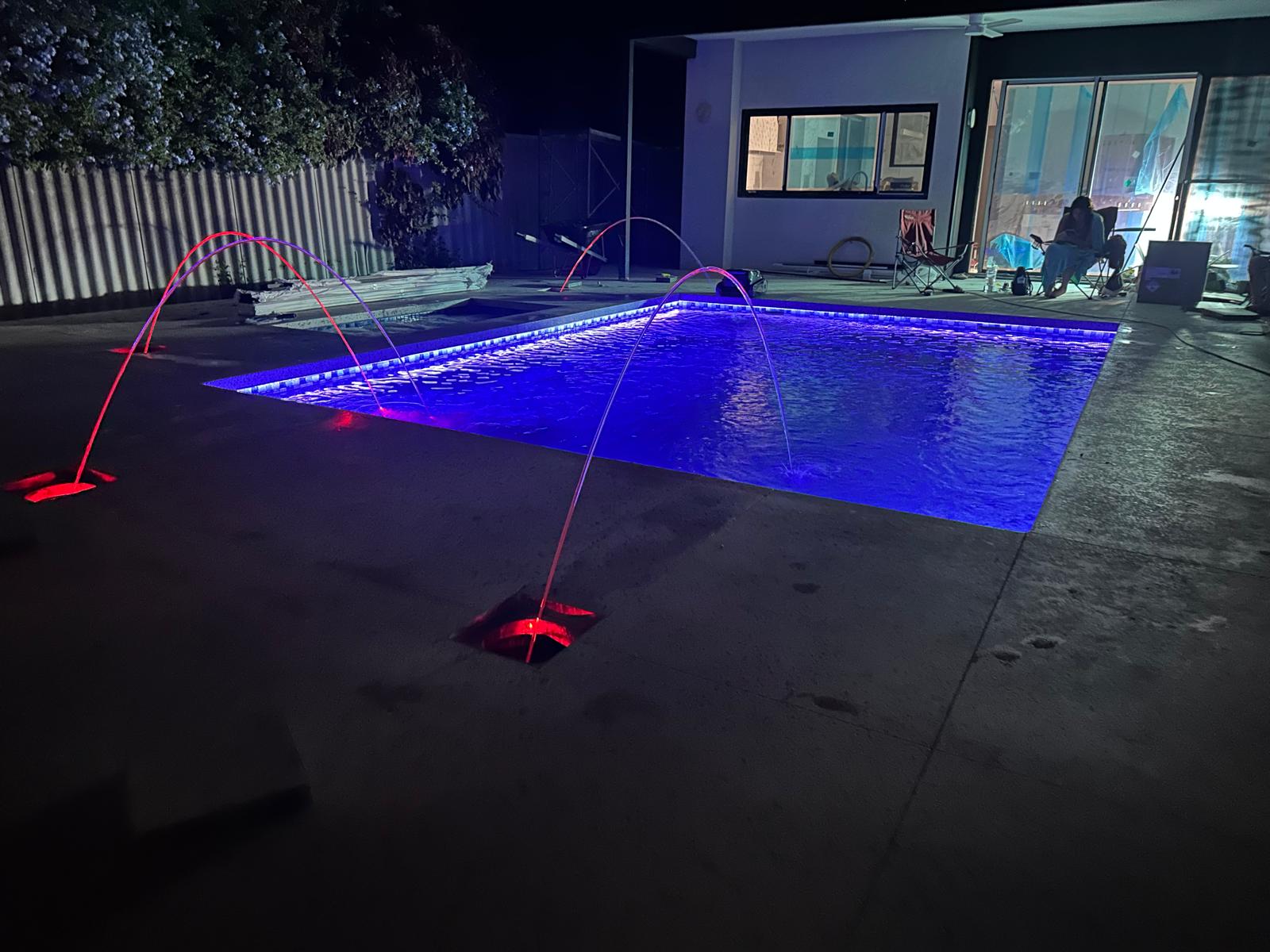
Licensed Residential Electricians Performing Rewiring and Inspections Perth
Electrical fault finding is one of the most critical services we provide across Perth. Hidden electrical problems can cause repeated power trips, flickering lights, or overheating circuits if not resolved properly. Our licensed electricians use advanced diagnostic tools to identify the root cause quickly and accurately. Once detected, we implement safe and effective repair solutions. This approach prevents recurring issues and ensures long-term reliability.
Inlightec Electrical Solutions provides expert switchboard upgrades in Perth to enhance safety and prevent electrical faults. Our licensed electricians assess your system, replace outdated components, and ensure compliance with Australian standards. Homeowners searching for a qualified electrician in Perth can rely on our fast and professional service. We also provide emergency switchboard repairs, safety switch installation, and electrical inspections. Every project is completed efficiently and safely. Our team is trained to manage both residential and commercial switchboard systems. Choosing Inlightec guarantees peace of mind and reliable electrical performance. Safety, experience, and efficiency make us a preferred choice for switchboard services in Perth.
Looking for an affordable electrician in Perth doesn't mean you have to compromise on quality. At Inlightec Electrical Solutions, we provide competitive pricing for services like residential electrical services, commercial electrical maintenance, and industrial electrical contractors. Our licensed electricians are trained to handle emergency electrical repairs, switchboard upgrades, and lighting installations. We also provide expert advice on energy-efficient solutions to help reduce electricity bills. Searching for electrician Perth WA or local electrical contractors will connect you with our experienced team. With years of experience, we ensure that every project is completed to the highest standard. Professionalism, reliability, and affordability are key pillars of our service. Trust us for all your electrical needs, big or small.
Smart home electrical installations are becoming increasingly popular. We install automated lighting, smart switches, and integrated systems that improve convenience and control. Proper wiring ensures smooth communication between devices. Our electricians ensure systems are secure and energy efficient. Smart upgrades enhance comfort and property value.
Certified Electricians Performing Lighting and Electrical Upgrades Perth
Ceiling fan installation is a practical and energy-efficient way to improve indoor comfort. Our electricians install and wire ceiling fans securely to ensure smooth and safe operation. Proper installation prevents imbalance, noise issues, and electrical faults over time. We work carefully to maintain the aesthetic appeal of your ceilings. A professionally installed ceiling fan enhances airflow while reducing energy consumption.
Power point installations are often necessary in modern homes and offices with growing electrical demands. We safely add new outlets to improve accessibility and convenience throughout your property. Our electricians ensure circuits are not overloaded during installation. Each power point is positioned strategically for maximum practicality. Upgrading your electrical layout increases both safety and usability.
Trusted Licensed Electricians Handling EV Charger Installation Perth
For commercial clients, choosing a licensed commercial electrician in Perth is vital. Inlightec Electrical Solutions provides expert office electrical fitouts, shop fit-outs, and industrial electrical maintenance. Our team also handles preventative maintenance, electrical compliance inspections, and emergency repairs. Businesses searching for a trusted commercial electrician near me will find our services fast, professional, and reliable. We offer tailored solutions for energy efficiency, security lighting, and data cabling. Every project is completed with safety, compliance, and minimal disruption in mind. Our experienced electricians are fully insured and licensed to manage commercial electrical systems of any scale. Inlightec ensures your business stays powered and compliant at all times.
Inlightec Electrical Solutions is the go-to choice for commercial electrical maintenance in Perth. Our licensed electricians handle office electrical fitouts, shop fit-outs, industrial maintenance, and preventative inspections. Businesses searching for a reliable commercial electrician near me can rely on our team for fast, professional, and compliant solutions. We also provide data cabling, security lighting, and emergency repairs. Our technicians are experienced in managing commercial systems safely and efficiently. Every project is tailored to the client's needs, ensuring minimal downtime. Affordable pricing and expert workmanship make Inlightec a trusted name in Perth. Safety, efficiency, and customer satisfaction remain our top priorities. We help businesses maintain uninterrupted operations.
Trusted Electricians for Security Lighting Installations Perth
Electrical safety inspections are particularly important for rental properties in Perth. Landlords must ensure wiring, smoke alarms, and safety switches meet compliance standards. We conduct detailed checks and provide documentation for peace of mind. Addressing minor issues early avoids serious problems later. Protecting tenants begins with safe electrical systems.
Electrical compliance is critical for both residential landlords and commercial property owners. We conduct thorough safety checks to ensure systems meet current Australian regulations. Compliance certificates are issued once all standards are satisfied. Regular assessments protect occupants and reduce legal risks. Staying compliant demonstrates responsible property management.
Top Rated Electricians for Residential Electrical Safety Perth
Underground electrical services require careful planning and technical expertise. Our electricians manage trenching, cabling, and safe installations for new developments. We follow strict guidelines to ensure durability and long-term performance. Proper installation prevents future faults and costly repairs. Our experience ensures projects are completed efficiently and safely.
Inlightec Electrical Solutions also specialises in civil and industrial electrical projects throughout Perth. Our team handles underground cabling, infrastructure installations, and large-scale electrical systems. We work closely with contractors and engineers to ensure projects stay on schedule. Safety procedures are strictly followed at every stage of work. Our expertise ensures durable and high-performance electrical solutions.
Certified Residential Electricians for Home Safety Solutions Perth
At Inlightec Electrical Solutions, customer satisfaction remains at the heart of everything we do. We believe that quality service begins with clear communication and honest advice. Our electricians respect your time, property, and budget on every project. By combining technical expertise with friendly service, we create positive experiences for our clients. That commitment has made us a trusted electrician in Perth.
Electrical safety is a priority for every home. Inlightec Electrical Solutions offers RCD safety switch installations, smoke alarm installations, and switchboard upgrades to protect Perth residents. Our licensed electricians conduct thorough electrical inspections and identify risks before they become serious problems. Homeowners searching for residential electricians near me will find our team available for both routine maintenance and emergency repairs. We also provide house rewiring, electrical fault finding, and outdoor lighting installation. Every project is completed with safety, efficiency, and compliance in mind. Our experienced electricians deliver solutions tailored to the needs of each client. Choosing Inlightec ensures reliable service, peace of mind, and long-lasting electrical solutions. Safety and quality remain our top priorities.
"Wiring" redirects here. For the software development platform, see Wiring (software). For the album by Trio 3 + Vijay Iyer, see Wiring (album).
This article is about building wiring. For power distribution, see Electric power transmission and Electric power distribution.
For broader coverage of this topic, see Electrical cabling.
For wiring colours, see Electrical code.
v
t
e
Electrical installations
Wiring practice by region or country
North American practice
United Kingdom practice
Regulation of electrical installations
International standard (IEC 60364)
UK wiring regulations (BS 7671)
Canadian Electrical Code
U.S. National Electrical Code
Cabling and accessories
AC power plugs and sockets
Cable tray
Electrical conduit
Mineral-insulated copper-clad cable
Multiway switching
Steel wire armoured cable
Radial circuit
Ring circuit
Ring main unit
Thermoplastic-sheathed cable
Switching and protection devices
AFCI
ELCB
Electrical busbar system
Circuit breakers
Disconnector
Fuse
Residual-current device
Distribution board
Consumer unit
Electrical switch
Earthing systems
Electrical symbols for wiring[vague]
Electrical wiring is an electrical installation of cabling and associated devices such as switches, distribution boards, sockets, and light fittings in a structure.
Wiring is subject to safety standards for design and installation. Allowable wire and cable types and sizes are specified according to the circuit operating voltage and electric current capability, with further restrictions on the environmental conditions, such as ambient temperature range, moisture levels, and exposure to sunlight and chemicals.
Associated circuit protection, control, and distribution devices within a building's wiring system are subject to voltage, current, and functional specifications. Wiring safety codes vary by locality, country, or region. The International Electrotechnical Commission (IEC) is attempting to harmonise wiring standards among member countries, but significant variations in design and installation requirements still exist.
Wiring methods
[edit]
This section does not cite any sources. Please help improve this section by adding citations to reliable sources. Unsourced material may be challenged and removed.(April 2021) (Learn how and when to remove this message)
Installing electrical wiring by "chasing" grooves into the masonry structure of the walls of a building
Materials for wiring interior electrical systems in buildings vary depending on:
Intended use and amount of power demand on the circuit
Type of occupancy and size of the building
National and local regulations
Environment in which the wiring must operate.
Wiring systems in a single family home or duplex, for example, are simple, with relatively low power requirements, infrequent changes to the building structure and layout, usually with dry, moderate temperature and non-corrosive environmental conditions. In a light commercial environment, more frequent wiring changes can be expected, large apparatus may be installed and special conditions of heat or moisture may apply. Heavy industries have more demanding wiring requirements, such as very large currents and higher voltages, frequent changes of equipment layout, corrosive, or wet or explosive atmospheres. In facilities that handle flammable gases or liquids, special rules may govern the installation and wiring of electrical equipment in hazardous areas.
Wires and cables are rated by the circuit voltage, temperature rating and environmental conditions (moisture, sunlight, oil, chemicals) in which they can be used. A wire or cable has a voltage (to neutral) rating and a maximum conductor surface temperature rating. The amount of current a cable or wire can safely carry depends on the installation conditions.
The international standard wire sizes are given in the IEC 60228 standard of the International Electrotechnical Commission. In North America, the American Wire Gauge standard for wire sizes is used.
Cables
[edit]
Main article: Power cable
This section needs additional citations for verification. Please help improve this article by adding citations to reliable sources in this section. Unsourced material may be challenged and removed.(April 2021) (Learn how and when to remove this message)
Modern wiring materials
[edit]
Modern non-metallic sheathed cables, such as (US and Canadian) Types NMB and NMC, consist of two to four wires covered with thermoplastic insulation, plus a wire for Protective Earthing/Grounding (bonding), surrounded by a flexible plastic jacket. In North America and the UK this conductor is usually bare wire but in the UK it is required that this bare Protective Earth (PE) conductor be sheathed in Green/Yellow insulating tubing where the Cable Sheathing has been removed. Most other jurisdictions now require the Protective Earth conductor to be insulated to the same standard as the current carrying conductors with Green/Yellow insulation.
With some cables the individual conductors are wrapped in paper before the plastic jacket is applied.
Special versions of non-metallic sheathed cables, such as US Type UF, are designed for direct underground burial (often with separate mechanical protection) or exterior use where exposure to ultraviolet radiation (UV) is a possibility. These cables differ in having a moisture-resistant construction, lacking paper or other absorbent fillers, and being formulated for UV resistance.
Rubber-like synthetic polymer insulation is used in industrial cables and power cables installed underground because of its superior moisture resistance.
Insulated cables are rated by their allowable operating voltage and their maximum operating temperature at the conductor surface. A cable may carry multiple usage ratings for applications, for example, one rating for dry installations and another when exposed to moisture or oil.
Generally, single conductor building wire in small sizes is solid wire, since the wiring is not required to be very flexible. Building wire conductors larger than 10 AWG (or about 5 mm2) are stranded for flexibility during installation, but are not sufficiently pliable to use as appliance cord.
Cables for industrial, commercial and apartment buildings may contain many insulated conductors in an overall jacket, with helical tape steel or aluminium armour, or steel wire armour, and perhaps as well an overall PVC or lead jacket for protection from moisture and physical damage. Cables intended for very flexible service or in marine applications may be protected by woven bronze wires. Power or communications cables (e.g., computer networking) that are routed in or through air-handling spaces (plenums) of office buildings are required under the model building code to be either encased in metal conduit, or rated for low flame and smoke production.
Copper sheathed mineral insulated cables at a panel board
For some industrial uses in steel mills and similar hot environments, no organic material gives satisfactory service. Cables insulated with compressed mica flakes are sometimes used. Another form of high-temperature cable is mineral-insulated cable, with individual conductors placed within a copper tube and the space filled with magnesium oxide powder. The whole assembly is drawn down to smaller sizes, thereby compressing the powder. Such cables have a certified fire resistance rating and are more costly than non–fire-rated cable. They have little flexibility and behave more like rigid conduit rather than flexible cables.
The environment of the installed wires determine how much current a cable is permitted to carry. Because multiple conductors bundled in a cable cannot dissipate heat as easily as single insulated conductors, those circuits are always rated at a lower ampacity. Tables in electrical safety codes give the maximum allowable current based on size of conductor, voltage potential, insulation type and thickness, and the temperature rating of the cable itself. The allowable current will also be different for wet or dry locations, for hot (attic) or cool (underground) locations. In a run of cable through several areas, the part with the lowest rating becomes the rating of the overall run.
Cables usually are secured with special fittings where they enter electrical apparatus; this may be a simple screw clamp for jacketed cables in a dry location, or a polymer-gasketed cable connector that mechanically engages the armour of an armoured cable and provides a water-resistant connection. Special cable fittings may be applied to prevent explosive gases from flowing in the interior of jacketed cables, where the cable passes through areas where flammable gases are present. To prevent loosening of the connections of individual conductors of a cable, cables must be supported near their entrance to devices and at regular intervals along their runs. In tall buildings, special designs are required to support the conductors of vertical runs of cable. Generally, only one cable per fitting is permitted, unless the fitting is rated or listed for multiple cables.
Special cable constructions and termination techniques are required for cables installed in ships. Such assemblies are subjected to environmental and mechanical extremes. Therefore, in addition to electrical and fire safety concerns, such cables may also be required to be pressure-resistant where they penetrate a vessel's bulkheads. They must also resist corrosion caused by salt water or salt spray, which is accomplished through the use of thicker, specially constructed jackets, and by tinning the individual wire stands.
US single-phase residential power distribution transformer, showing the two insulated line conductors and the bare neutral conductor (derived from the earthed center-tap of the transformer). The distribution supporting cantenaries are also shown.
In North American practice, for residential and light commercial buildings fed with a single-phase split 120/240 service, an overhead cable from a transformer on a power pole is run to the service entrance point. The cable is a three conductor twisted "triplex" cable with a bare neutral and two insulated conductors, with no overall cable jacket.[1] The neutral conductor is often a supporting "messenger" steel wire, which is used to support the insulated line conductors.
Copper conductors
[edit]
Main article: Copper conductor
Electrical devices often use copper conductors because of their properties, including their high electrical conductivity, tensile strength, ductility, creep resistance, corrosion resistance, thermal conductivity, coefficient of thermal expansion, solderability, resistance to electrical overloads, compatibility with electrical insulators, and ease of installation. Copper is used in many types of electrical wiring.[2][3]
Aluminium conductors
[edit]
Terminal blocks for joining aluminium and copper conductors. The terminal blocks may be mounted on a DIN rail.
Aluminium wire was common in North American residential wiring from the late 1960s to mid-1970s due to the rising cost of copper. Because of its greater resistivity, aluminium wiring requires larger conductors than copper. For instance, instead of 14 AWG (American wire gauge) copper wire, aluminium wiring would need to be 12 AWG on a typical 15 ampere lighting circuit, though local building codes vary.
Solid aluminium conductors were originally made in the 1960s from a utility-grade aluminium alloy that had undesirable properties for a building wire, and were used with wiring devices intended for copper conductors.[4][5] These practices were found to cause defective connections and fire hazards. In the early 1970s new aluminium wire made from one of several special alloys was introduced, and all devices – breakers, switches, receptacles, splice connectors, wire nuts, etc. — were specially designed for the purpose. These newer aluminium wires and special designs address problems with junctions between dissimilar metals, oxidation on metal surfaces, and mechanical effects that occur as different metals expand at different rates with increases in temperature.[citation needed]
Unlike copper, aluminium has a tendency to creep or cold-flow under pressure, so older plain steel screw clamped connections could become loose over time. Newer electrical devices designed for aluminium conductors have features intended to compensate for this effect. Unlike copper, aluminium forms an insulating oxide layer on the surface. This is sometimes addressed by coating aluminium conductors with an antioxidant paste (containing zinc dust in a low-residue polybutene base[6]) at joints, or by applying a mechanical termination designed to break through the oxide layer during installation.
Some terminations on wiring devices designed only for copper wire would overheat under heavy current load and cause fires when used with aluminium conductors. Revised standards for wire materials and wiring devices (such as the CO/ALR "copper-aluminium-revised" designation) were developed to reduce these problems. While larger sizes are still used to feed power to electrical panels and large devices, aluminium wiring for residential use has acquired a poor reputation and has fallen out of favour.
Aluminium conductors are still heavily used for bulk power transmission, electric power distribution, and large feeder circuits with heavy current loads, due to the various advantages they offer over copper wiring. Aluminium conductors both cost and weigh less than copper conductors, so a much larger cross sectional area can be used for the same weight and price. This can compensate for the higher resistance and lower mechanical strength of aluminium, meaning the larger cross sectional area is needed to achieve comparable current capacity and other features. Aluminium conductors must be installed with compatible connectors and special care must be taken to ensure the contact surface does not oxidise.
Raceways and cable runs
[edit]
See also: Electrical conduit
This section needs additional citations for verification. Please help improve this article by adding citations to reliable sources in this section. Unsourced material may be challenged and removed.(April 2021) (Learn how and when to remove this message)
Electrical conduit risers, seen inside fire-resistance–rated shaft, as seen entering bottom of a firestop. The firestop is made of firestop mortar on top, rockwool on the bottom. Raceways are used to protect cables from damage.
Insulated wires may be run in one of several forms between electrical devices. This may be a specialised bendable pipe, called a conduit, or one of several varieties of metal (rigid steel or aluminium) or non-metallic (PVC or HDPE) tubing. Rectangular cross-section metal or PVC wire troughs (North America) or trunking (UK) may be used if many circuits are required. Wires run underground may be run in plastic tubing encased in concrete, but metal elbows may be used in severe pulls. Wiring in exposed areas, for example factory floors, may be run in cable trays or rectangular raceways having lids.
Where wiring, or raceways that hold the wiring, must traverse fire-resistance rated walls and floors, the openings are required by local building codes to be firestopped. In cases where safety-critical wiring must be kept operational during an accidental fire, fireproofing must be applied to maintain circuit integrity in a manner to comply with a product's certification listing. The nature and thickness of any passive fire protection materials used in conjunction with wiring and raceways has a quantifiable impact upon the ampacity derating, because the thermal insulation properties needed for fire resistance also inhibit air cooling of power conductors.
A cable tray can be used in stores and dwellings.
Cable trays are used in industrial areas where many insulated cables are run together. Individual cables can exit the tray at any point, simplifying the wiring installation and reducing the labour cost for installing new cables. Power cables may have fittings in the tray to maintain clearance between the conductors, but small control wiring is often installed without any intentional spacing between cables.
Local electrical regulations may restrict or place special requirements on mixing of voltage levels within one cable tray. Good design practices may segregate, for example, low level measurement or signal cables from trays carrying high power branch circuits, to prevent induction of noise into sensitive circuits.
Since wires run in conduits or underground cannot dissipate heat as easily as in open air, and since adjacent circuits contribute induced currents, wiring regulations give rules to establish the current capacity (ampacity).
Special sealed fittings are used for wiring routed through potentially explosive atmospheres.
Bus bars, bus duct, cable bus
[edit]
Main articles: Busbar and Bus duct
This section does not cite any sources. Please help improve this section by adding citations to reliable sources. Unsourced material may be challenged and removed.(April 2021) (Learn how and when to remove this message)
Topside of firestop with penetrants consisting of electrical conduit on the left and a bus duct on the right. The firestop consists of firestop mortar on top and rockwool on the bottom, for a two-hour fire-resistance rating.
For very high currents in electrical apparatus, and for high currents distributed through a building, bus bars can be used. (The term "bus" is a contraction of the Latin omnibus – meaning "for all".) Each live ("hot") conductor of such a system is a rigid piece of copper or aluminium, usually in flat bars (but sometimes as tubing or other shapes). Open bus bars are never used in publicly accessible areas, although they are used in manufacturing plants and power company switch yards to gain the benefit of air cooling. A variation is to use heavy cables, especially where it is desirable to transpose or "roll" phases.
In industrial applications, conductor bars are often pre-assembled with insulators in grounded enclosures. This assembly, known as bus duct or busway, can be used for connections to large switchgear or for bringing the main power feed into a building. A form of bus duct known as "plug-in bus" is used to distribute power down the length of a building; it is constructed to allow tap-off switches or motor controllers to be installed at designated places along the bus. The big advantage of this scheme is the ability to remove or add a branch circuit without removing voltage from the whole duct.
Busbars for distributing protective earth (ground)
Bus ducts may have all phase conductors in the same enclosure (non-isolated bus), or may have each conductor separated by a grounded barrier from the adjacent phases (segregated bus). For conducting large currents between devices, a cable bus is used.[further explanation needed]
For very large currents in generating stations or substations, where it is difficult to provide circuit protection, an isolated-phase bus is used. Each phase of the circuit is run in a separate grounded metal enclosure. The only fault possible is a phase-to-ground fault, since the enclosures are separated. This type of bus can be rated up to 50,000 amperes and up to hundreds of kilovolts (during normal service, not just for faults), but is not used for building wiring in the conventional sense.
Electrical panels
[edit]
Electrical panels, cables and firestops in an electrical service room at a paper mill in Ontario, Canada
Electrical panels are easily accessible junction boxes used to reroute and switch electrical services. The term is often used to refer to circuit breaker panels or fuseboxes. Local codes can specify physical clearance around the panels.[citation needed]
Degradation by pests
[edit]
Squirrels, rats, and other rodents may gnaw on unprotected wiring, causing fire and shock hazards.[7][8] This is especially true of PVC-insulated telephone and computer network cables. Several techniques have been developed to deter these pests, including insulation loaded with pepper dust.[citation needed]
Early wiring methods
[edit]
This section needs additional citations for verification. Please help improve this article by adding citations to reliable sources in this section. Unsourced material may be challenged and removed.(April 2021) (Learn how and when to remove this message)
The first interior power wiring systems used conductors that were bare or covered with cloth, which were secured by staples to the framing of the building or on running boards. Where conductors went through walls, they were protected with cloth tape. Splices were done similarly to telegraph connections, and soldered for security. Underground conductors were insulated with wrappings of cloth tape soaked in pitch, and laid in wooden troughs which were then buried. Such wiring systems were unsatisfactory because of the danger of electrocution and fire, plus the high labour cost for such installations. The first electrical codes arose in the 1880s with the commercial introduction of electrical power; however, many conflicting standards existed for the selection of wire sizes and other design rules for electrical installations, and a need was seen to introduce uniformity on the grounds of safety.
Knob and tube (US)
[edit]
Main article: Knob-and-tube wiring
Knob-and-tube wiring (The orange cable is an unrelated extension cord.)
The earliest standardized method of wiring in buildings, in common use in North America from about 1880 to the 1930s, was knob and tube (K&T) wiring: single conductors were run through cavities between the structural members in walls and ceilings, with ceramic tubes forming protective channels through joists and ceramic knobs attached to the structural members to provide air between the wire and the lumber and to support the wires. Since air was free to circulate over the wires, smaller conductors could be used than required in cables. By arranging wires on opposite sides of building structural members, some protection was afforded against short-circuits that can be caused by driving a nail into both conductors simultaneously.
By the 1940s, the labor cost of installing two conductors rather than one cable resulted in a decline in new knob-and-tube installations. However, the US code still allows new K&T wiring installations in special situations (some rural and industrial applications).
Metal-sheathed wires
[edit]
Lead-cased electrical cable from a circa 1912 house in southern England. Two conductors are sheathed in red and black rubber, and the central earth wire is bare. These cables are dangerous because the sheath is prone to split if repeatedly flexed.
In the United Kingdom, an early form of insulated cable,[9] introduced in 1896, consisted of two impregnated-paper-insulated conductors in an overall lead sheath. Joints were soldered, and special fittings were used for lamp holders and switches. These cables were similar to underground telegraph and telephone cables of the time. Paper-insulated cables proved unsuitable for interior wiring installations because very careful workmanship was required on the lead sheaths to ensure moisture did not affect the insulation.
A system later invented in the UK in 1908 employed vulcanised-rubber insulated wire enclosed in a strip metal sheath. The metal sheath was bonded to each metal wiring device to ensure earthing continuity.
A system developed in Germany called "Kuhlo wire" used one, two, or three rubber-insulated wires in a brass or lead-coated iron sheet tube, with a crimped seam. The enclosure could also be used as a return conductor. Kuhlo wire could be run exposed on surfaces and painted, or embedded in plaster. Special outlet and junction boxes were made for lamps and switches, made either of porcelain or sheet steel. The crimped seam was not considered as watertight as the Stannos wire used in England, which had a soldered sheath.[10]
A somewhat similar system called "concentric wiring" was introduced in the United States around 1905. In this system, an insulated electrical wire was wrapped with copper tape which was then soldered, forming the grounded (return) conductor of the wiring system. The bare metal sheath, at earth potential, was considered safe to touch. While companies such as General Electric manufactured fittings for the system and a few buildings were wired with it, it was never adopted into the US National Electrical Code. Drawbacks of the system were that special fittings were required, and that any defect in the connection of the sheath would result in the sheath becoming energised.[11]
Other historical wiring methods
[edit]
Armored cables with two rubber-insulated conductors in a flexible metal sheath were used as early as 1906, and were considered at the time a better method than open knob-and-tube wiring, although much more expensive.
The first rubber-insulated cables for US building wiring were introduced in 1922 with
US patent 1458803, Burley, Harry & Rooney, Henry, "Insulated electric wire", issued 12 June 1923, assigned to Boston Insulated Wire and Cable. These were two or more solid copper electrical wires with rubber insulation, plus woven cotton cloth over each conductor for protection of the insulation, with an overall woven jacket, usually impregnated with tar as a protection from moisture. Waxed paper was used as a filler and separator.
Over time, rubber-insulated cables become brittle because of exposure to atmospheric oxygen, so they must be handled with care and are usually replaced during renovations. When switches, socket outlets or light fixtures are replaced, the mere act of tightening connections may cause hardened insulation to flake off the conductors. Rubber insulation further inside the cable often is in better condition than the insulation exposed at connections, due to reduced exposure to oxygen.
The sulfur in vulcanized rubber insulation attacked bare copper wire so the conductors were tinned to prevent this. The conductors reverted to being bare when rubber ceased to be used.
Diagram of a simple electrical cable with three insulated conductors, with IEC colour scheme
About 1950, PVC insulation and jackets were introduced, especially for residential wiring. About the same time, single conductors with a thinner PVC insulation and a thin nylon jacket (e.g. US Type THN, THHN, etc.) became common.[citation needed]
The simplest form of cable has two insulated conductors twisted together to form a unit. Such non-jacketed cables with two (or more) conductors are used only for extra-low voltage signal and control applications such as doorbell wiring.
Other methods of securing wiring that are now obsolete include:
Re-use of existing gas pipes when converting gas lighting installations to electric lighting. Insulated conductors were pulled through the pipes that had formerly supplied the gas lamps. Although used occasionally, this method risked insulation damage from sharp edges inside the pipe at each joint.
Wood mouldings with grooves cut for single conductor wires, covered by a wooden cap strip. These were prohibited in North American electrical codes by 1928. Wooden moulding was also used to some degree in the UK, but was never permitted by German and Austrian rules.[12]
A system of flexible twin cords supported by glass or porcelain buttons was used near the turn of the 20th century in Europe, but was soon replaced by other methods.[13]
During the first years of the 20th century, various patented forms of wiring system such as Bergman and Peschel tubing were used to protect wiring; these used very thin fibre tubes, or metal tubes which were also used as return conductors.[14]
In Austria, wires were concealed by embedding a rubber tube in a groove in the wall, plastering over it, then removing the tube and pulling wires through the cavity.[15]
Metal moulding systems, with a flattened oval section consisting of a base strip and a snap-on cap channel, were more costly than open wiring or wooden moulding, but could be easily run on wall surfaces. Similar surface mounted raceway wiring systems are still available today.
See also
[edit]
10603 – a frequently used MIL-SPEC compliant wire
Bus duct
Cable entry system
Cable gland
Cable management
Cable tray
Domestic AC power plugs and sockets
Electric power distribution
Electrical code
Electrical conduit
Electrical room
Electrical wiring in North America
Electrical wiring in the United Kingdom
Grounding
Ground and neutral
Home wiring
Industrial and multiphase power plugs and sockets
Oxygen-free copper
Portable cord
Power cord
Restriction of Hazardous Substances Directive (RoHS)
Single-phase electric power
Structured cabling
Three-phase electric power
Tri-rated cable
References
[edit]
^
"Generating Power to Your House - How Power Grids Work - HowStuffWorks". HowStuffWorks. April 2000. Retrieved 21 February 2016.
^Pops, Horace (June 2008). "Processing of wire from antiquity to the future". Wire Journal International: 58–66.
^The Metallurgy of Copper Wire Archived 1 September 2013 at the Wayback Machine. litz-wire.com
^"The Evolution of Aluminum Conductors Used for Building Wire and Cable" (PDF). NEMA. 2012. Archived from the original (PDF) on 10 October 2016. Retrieved 12 October 2016.
^"Aluminum Building Wire Installation & Terminations" (PDF). IAEI News (January/February 2006). Archived from the original (PDF) on 27 January 2021. Retrieved 12 October 2016.
^"Ideal Noalox Antioxidant Material Safety Data Sheet" (PDF).
^"Guide to Safe Removal". Squirrels in the Attic. Retrieved 19 April 2012.
^University of Illinois Extension. "Tree Squirrels > Damage Prevention and Control Measures". Living with Wildlife in Illinois. University of Illinois Board of Trustees. Retrieved 12 March 2013.
^Robert M. Black, The History of Electric Wires and Cable, Peter Pergrinus Ltd. London, 1983 ISBN 0-86341-001-4, pp. 155–158
^Croft
^Schneider, Norman H., Wiring houses for the electric light; together with special references to low voltage battery systems, Spon and Chamberlain, New York 1916, pp. 93–98
^Croft, p. 142
^Croft, p. 143
^Croft, p. 136
^Croft, p. 137
Bibliography
[edit]
Croft, Terrell (1915). Wiring of Finished Buildings: A Practical Treatise, Dealing with the Commercial and the Technical Phases of the Subject, for the Central Station Man, Electrical Contractor and Wireman, first edition. New York: McGraw-Hill Book Company. OCLC 3491162.
External links
[edit]
Wikimedia Commons has media related to Electrical wiring.
Electrical wiring FAQ (oriented to US and Canadian practice)
Authority control databases
International
GND
Other
NARA
Yale LUX
About perth
Capital city of Western Australia
This article is about the capital of Western Australia. For the city in Scotland, see Perth, Scotland. For other uses, see Perth (disambiguation).
• Total2,384,371 (2024)[5] (4th) • Density371.5189/km2 (962.229/sq mi)Time zoneUTC+08:00 (AWST)Mean max temp24.8 °C (76.6 °F)Mean min temp12.8 °C (55.0 °F)Annual rainfall731.1 mm (28.78 in)
Perth (Nyungar: Boorloo) is the capital city of Western Australia. It is the fourth-most-populous city in Australia, with a population of over 2.3 million within Greater Perth as of 2023[update]. The world's most isolated major city by certain criteria, Perth is part of the South West Land Division of Western Australia, with most of Perth's metropolitan area on the Swan Coastal Plain between the Indian Ocean and the Darling Scarp. The city has expanded outward from the original British settlements on the Swan River, upon which its central business district and port of Fremantle are situated.
Perth was founded by Captain James Stirling in 1829 as the administrative centre of the Swan River Colony. The city is situated on the traditional lands of the Whadjuk Noongar people, where Aboriginal Australians have lived for at least 48,000 years. Perth was named after the city of Perth in Scotland.[7] Initially established as a free settlement, the colony accepted transported convicts from 1850 to supply labour for public works and construction. Perth was proclaimed as a city by Queen Victoria in 1856.[8] Substantial population growth occurred during the late 19th-century Western Australian gold rushes, and the city has continued to expand, particularly after World War II due to a high net migration rate. Post-war immigrants were predominantly from the British Isles and Southern Europe, while more recent arrivals see a growing population of Asian descent. During the late 20th and early 21st centuries, a series of mining booms in various regions of Western Australia propelled Perth into the role of the regional headquarters for significant mining operations. It became Australia's fourth-most populated city in 1984, overtaking Adelaide.[9]
Ranked as one of the world's most liveable cities, Perth was classified by the Globalization and World Cities Research Network as a Beta global city in 2020. As of 2021,[update] Perth is divided into 30 local government areas, comprising over 350 suburbs. The metropolitan contours span 125 kilometres (78 mi) from Two Rocks in the north to Singleton in the south, and 45 kilometres (28 mi) from the west coast to Sawyers Valley in the east. Beyond the central business district, predominant urban centres within the metropolitan area include Armadale, Fremantle, Joondalup, Midland and Rockingham. Most of those were originally established as separate settlements and retained a distinct identity after being subsumed into the wider metropolitan area. Mandurah, Western Australia's second-largest city, forms a conurbation with Perth along the coastline. Despite this, it is generally regarded as an independent city.
Perth is home to many parkland areas and nature reserves, the most-visited being Kings Park and Botanic Garden, one of the world's largest inner-city parks. Other popular natural features include Cottesloe Beach and Rottnest Island. Notable heritage buildings and cultural sites include Perth Mint, WA Museum Boola Bardip and the World Heritage-listed Fremantle Prison. All five of Western Australia's universities are based in Perth. The city is served by Fremantle Harbour and Perth Airport.
Toponymy
[edit]
The name of the city is taken from Perth, Scotland, in honour of the Secretary of State for War and the Colonies, and Member for Perthshire in the British House of Commons, Sir George Murray.[10][11] Murray's association with the city was included in Stirling's proclamation of the colony, read in Fremantle on 18 June 1829, which concluded with the statement, "Given under my hand and Seal at Perth this 18th Day of June 1829. James Stirling Lieutenant Governor".[12] The only contemporary information on the source of the name comes from Charles Fremantle's diary entry for 12 August 1829, which records that they "named the town Perth according to the wishes of Sir George Murray".[13][14]
The Noongar name Boorloo is sometimes used to denote the central business district area,[15][16] the local government area,[17] or the capital city in general.[18][19][20] The name Boorloo was initially recorded by Robert Menli Lyon as Boorlo in 1833,[21] which was interpreted as "Perth, properly Point Fraser" (a location in East Perth). He also gave the name Byerbrup for "the highland stretching along from Mount Eliza through the centre of the town of Perth".[22] In 1947, Ludwig Glauert posited that Lyon may have misunderstood his sources and that "boorloo" or "belo" (now transcribed as "bilya") is simply the Noongar word for "river".[23] Another source has interpreted Boorloo to mean "big swamp",[24] describing the chain of lakes where the central business district and Northbridge are situated.[25]
In November 2024, when announcing the opening of Boorloo Bridge, the premier of Western Australia, Roger Cook, and two of his ministers, deputy premier Rita Saffioti and John Carey, referenced "the Noongar name for Perth – Boorloo",[26] and earlier in the year the Government of Western Australia stated "the name, Boorloo Bidee Mia, represents 'Perth pathway to housing' in Whadjuk Noongar language".[27]
History
[edit]
Main article: History of Perth, Western Australia
Prehistory
[edit]
Perth is located on the traditional land of the Whadjuk people, one of several groups in south-western Western Australia that make up the Noongar people.
Archaeological evidence attests to human habitation in the Perth area for at least 48,000 years;[28]: 9  according to Noongar tradition, they have occupied the area since "time immemorial".[29] Noongar country encompasses the south-west corner of Western Australia, with particular significance attached to the wetlands on the Swan Coastal Plain, both spiritually (featuring in local mythology) and as a source of food.[30]
The current central business district location is within the traditional territory of the Mooro, a Noongar clan, led by Yellagonga at the time of the British settlement. The Mooro was one of several Noongar clans based around the Swan River, known collectively as the Whadjuk. The Whadjuk themselves were one of a larger group of fourteen tribes that formed the south-west socio-linguistic block known as the Noongar (meaning 'the people' in their language), also sometimes called the Bibbulmun.[31][32][33]
On 19 September 2006, the Federal Court of Australia ruled in the case of Bennell v State of Western Australia [2006] FCA 1243 that Noongar native title persisted over Perth metropolitan area.[34] An appeal was subsequently filed, and in 2008, the Full Court of the Federal Court upheld parts of the appeal by the Western Australian and Commonwealth governments.[35] Following this appeal, the Western Australian Government and the South West Aboriginal Land and Sea Council negotiated the South West Native Title Settlement. This settlement, including the Whadjuk Indigenous Land Use Agreement over the Perth region, was finalised by the Federal Court on 1 December 2021.[36] As part of this agreement, the Noongar (Koorah, Nitja, Boordahwan) (Past, Present, Future) Recognition Act was passed in 2016, officially recognising the Noongar people as the traditional owners of the south-west region of Western Australia.[37]
European exploration
[edit]
Willem de Vlamingh's ships and black swans at the entrance to the Swan River, 1697
On 10 January 1697, Dutch Captain Willem de Vlamingh conducted the first documented exploration of the present-day Perth region. His crew initially explored the area on foot, leading them to what is now central Perth.[38] Vlamingh's expedition also ventured far up the Swan River, in search of native inhabitants.[39] They named the river Swarte Swaene-Revier, a reference to the black swans prevalent in the region.[39] After Vlamingh's expedition, other Europeans conducted further voyages of exploration in the period between 1697 and 1829. However, as with Vlamingh's assessments, they judged the area inhospitable and unsuitable for the agriculture necessary to sustain a European-style settlement.[40]
Swan River Colony
[edit]
Main article: Swan River Colony
Despite the Colony of New South Wales establishing a convict-supported settlement at King George's Sound (called Frederick Town, renamed to Albany upon becoming part of Western Australia) on the south coast of the continent in 1826, responding to rumours of potential French annexation, Perth marked the first comprehensive European settlement in the western portion of the continent in 1829. Officially designated as Western Australia in 1832, the colony retained the informal moniker "Swan River Colony" for many years, after the area's major watercourse.[41]
The Foundation of Perth 1829 by George Pitt Morison is a historical reconstruction of the official ceremony by which Perth was founded, although not everyone depicted may have actually been present.
On 4 June 1829, newly arriving British colonists had their first view of the mainland.[contradictory] Captain James Stirling, aboard Parmelia, noted that the site was "as beautiful as anything of this kind I had ever witnessed".[42] On 12 August that year, Helen Dance, wife of the captain of the second ship, Sulphur, felled a tree to commemorate the town's founding.[43] From 1831 onward, confrontations between British settlers and the Noongar people escalated due to conflicting land-value systems and increased land use as the colony expanded. These confrontations resulted in multiple events, including the murder of settlers (such as Thomas Peel's servant Hugh Nesbitt[44]), the execution without trial of Whadjuk elder Midgegooroo,[45] the killing of his son Yagan in 1833,[46] and the Pinjarra massacre in 1834.[28][47]
The strained relations between the Noongar people and the Europeans arose due to these events. Agricultural development on the land restricted the traditional hunter-gatherer practices of the native Whadjuk Noongar, compelling them to camp in designated areas, including swamps and lakes north of the European settlement. Third Swamp, known to them as Boodjamooling, remained a primary campsite for the remaining Noongar people in the Perth region, also accommodating travellers, itinerants, and homeless individuals. During the gold rush in the 1890s, miners on their way to the goldfields joined this community.[48]
Convict era and gold rushes
[edit]
Built by convicts in the early 1850s, Fremantle Prison is a UNESCO World Heritage Site.Perth Mint, built in 1899 to refine gold from the gold rushes
In 1850, at a time when penal transportation to Australia's eastern colonies had ceased, Western Australia was opened to convicts at the request of farming and business people due to a shortage of labour.[49] Over the next eighteen years, 9,721 convicts arrived in Western Australia aboard 43 ships,[50][51] outnumbering the approximately 7,300 free settlers.[52]
The designation of Perth as a city was formally announced by Queen Victoria in 1856. However, despite this recognition, Perth remained a tranquil town. A description from 1870 by a Melbourne journalist depicted it as:[53][54]
a quiet little town of some 3000 inhabitants spread out in straggling allotments down to the water's edge, intermingled with gardens and shrubberies and half rural in its aspect ... The main streets are macadamised, but the outlying ones and most of the footpaths retain their native state from the loose sand—the all pervading element of Western Australia—productive of intense glare or much dust in the summer and dissolving into slush during the rainy season.
With the discovery of gold at Kalgoorlie and Coolgardie in the late 19th century, Western Australia experienced a mining boom.[55] Perth became a key hub for supplying the goldfields, and the newfound prosperity helped finance the construction of important public buildings, roads and railways. Perth's population grew from approximately 8,500 in 1881 to 61,000 in 1901.[56]
Federation and beyond
[edit]
Like many of Perth's colonial-era buildings, Moir Chambers (left) at the southwest corner of St Georges Terrace and Barrack Street was demolished to make way for Citibank House during a period of substantial modernisation in the 1960s-70s.
After a referendum in 1900,[57] Western Australia joined the Federation of Australia in 1901,[53] and "became a founding state of Australia".[28] It was the last of the Australian colonies to agree to join the Federation, and it did so only after the other colonies had offered several concessions, including the construction of a transcontinental railway line from Port Augusta in South Australia to Kalgoorlie to link Perth with the eastern states.[58]
In 1927, Indigenous people were prohibited from entering large swathes of Perth under penalty of imprisonment, a ban that lasted until 1954.[59]
In 1933, two-thirds of Western Australians voted in a referendum to secede from the rest of Australia. However, the state general election held at the same time as the referendum had voted out the pro-independence government, replacing it with a government that did not support the independence movement. Respecting the result of the referendum, the new government nonetheless petitioned the Imperial Parliament at Westminster. The House of Commons established a select committee to consider the issue but after 18 months of negotiations and lobbying, finally refused to consider the matter, declaring that it could not legally grant secession.[57][60]
Perth entered the post-war period with a population of approximately 280,000 and an economy that had not experienced sustained growth since the 1920s. Successive state governments, beginning with the Willcock Labor Government (1936–1945), determined to change this. Planning for post-war economic development was initially driven by Russell Dumas, who as Director of Public Works (1941–1953) drew up plans for Western Australia's major post-war public-works projects, including the raising of the Mundaring and Wellington dams, the development of the new Perth Airport, and the development of a new industrial zone centred on Kwinana. The advent of the McLarty Liberal Government (1947–1953) saw the emergence of something of a consensus on the need for continuing economic development. Economic growth was fuelled by large-scale public works, the post-war immigration program, and the success that various state governments had in attracting substantial foreign investment into the state, beginning with the construction of the Anglo-Iranian Oil Refinery at Kwinana in 1951–52.[61]
Looking across Perth railway station c. 1955Elizabeth Quay Bridge
The result of this economic activity was the rapid growth of the population of Perth and a marked change in its urban design. Commencing in the 1950s, Perth began to expand along an extensive highway network laid out in the Stephenson-Hepburn Report, which noted that Perth was beginning to resemble a pattern of development less in line with the British experience and more in line with North America.[62] This was encouraged by the opening of the Narrows Bridge and the gradual closure of the Perth and Fremantle tram systems. The mining-pastoral boom of the 1960s only accelerated the pace of urban growth in Perth.
In 1962, Perth received global media attention when city residents lit their house lights and streetlights as American astronaut John Glenn passed overhead while orbiting the Earth on Friendship 7. This led to its being nicknamed the "City of Light".[a][63][64][65] The city repeated the act as Glenn passed overhead on the Space Shuttle in 1998.[66][67]
Perth's development and relative prosperity, especially since the mid-1960s,[68] has resulted from its role as the main service centre for the state's resource industries, which extract gold, iron ore, nickel, alumina, diamonds, mineral sands, coal, oil and natural gas.[69] Whilst most mineral and petroleum production takes place elsewhere in the state, the non-base services provide most of the employment and income to the people of Perth.[70]
Perth experienced a period of recovery in 1990. In July 1994, the state government separated the city's CBD from its suburban districts, creating the City of Perth and three other local government areas.[citation needed] Perth saw significant population growth in the 2000s, as well as the commencement of several major urban infrastructure projects, bolstered in part by the state's mining boom. These include the Perth Convention and Exhibition Centre (2004) and the redevelopment of the city's waterfront, giving rise to the mixed-use Elizabeth Quay precinct.
Geography
[edit]
Central business district
[edit]
See also: Perth (suburb)
City of Perth Library and State Buildings, Hay Street
The central business district of Perth is bounded by the Swan River to the south and east, with Kings Park on the western end and the railway reserve as the northern border.[citation needed] A state and federally funded project named Perth City Link sank a section of the railway line to allow easy pedestrian access between Northbridge and the CBD. The Perth Arena is an entertainment and sporting arena in the city link area that has received several architectural awards from institutions such as the Design Institute of Australia, the Australian Institute of Architects, and Colorbond.[71] St Georges Terrace is the area's prominent street, with a large amount of office space in the CBD. Hay Street and Murray Street have most of the retail and entertainment facilities. The city's tallest building is Central Park, the twelfth tallest building in Australia.[72] The CBD until 2012 was the centre of a mining-induced boom, with several commercial and residential projects being built, including Brookfield Place, a 244-metre (801 ft) office building for Anglo-Australian mining company BHP.[73]
Metropolitan area
[edit]
Main article: Perth metropolitan region
Area of the Perth Metropolitan Region Scheme
Perth's metropolitan area extends along the coast to Two Rocks in the north and Singleton to the south,[74] a distance of approximately 125 kilometres (80 mi).[75] From the coast in the west to Mundaring in the east is a distance of approximately 50 kilometres (30 mi). The Perth metropolitan area covers 6,418 square kilometres (2,478 sq mi).[6] The built-up urban area of Perth is 1,722 square kilometres (665 sq mi), the same as Wuhan or Salt Lake City and slightly smaller than London, making Perth the 67th-largest urban area in the world. Perth is also the 50th-least densely populated out of the 990 urban areas in the world with a population above 500,000.[76]
The metropolitan region is defined by the Planning and Development Act 2005 to include 30 local government areas, with the outer extent being the City of Wanneroo and the City of Swan to the north, the Shire of Mundaring, City of Kalamunda and the City of Armadale to the east, the Shire of Serpentine-Jarrahdale to the south-east and the City of Rockingham to the south-west, and including Rottnest Island and Garden Island off the west coast.[77] This extent correlates with the Metropolitan Region Scheme, and the Australian Bureau of Statistics' Perth (Major Statistical Division).[77]
The metropolitan extent of Perth can be defined in other ways—the Australian Bureau of Statistics Greater Capital City Statistical Area, or Greater Perth in short, consists of that area, plus the City of Mandurah and the Pinjarra Level 2 Statistical Area[78] of the Shire of Murray,[79][80] while the Regional Development Commissions Act 1993 includes the Shire of Serpentine-Jarrahdale in the Peel region.[81]
Geology and landforms
[edit]
See also: List of islands of Perth, Western Australia
The largest river flowing through Perth is the Swan River, named for the native black swans by Willem de Vlamingh, captain of a Dutch expedition and namer of Western Australia's Rottnest Island, who discovered the birds while exploring the area in 1697.[82] This water body is also known as Derbarl Yerrigan.[83] The city centre and most of the suburbs are on the sandy and relatively flat Swan Coastal Plain, which lies between the Darling Scarp and the Indian Ocean. The soils of this area are quite infertile.
Much of colonial Perth was built on the Perth Wetlands, a series of freshwater wetlands running from Herdsman Lake in the west through to Claisebrook Cove in the east.[84]
To the east, the city is bordered by a low escarpment called the Darling Scarp. Perth is on generally flat, rolling land, largely due to the high amount of sandy soils and deep bedrock. The Perth metropolitan area has two major river systems, one made up of the Swan and Canning Rivers, and one of the Serpentine and Murray Rivers, which discharge into the Peel Inlet at Mandurah. The Perth-Gingin Shrublands and Woodlands and Banksia Woodlands of the Swan Coastal Plain straddle the metropolitan area.
Climate
[edit]
Main article: Climate of Perth
Sunset over the Indian Ocean at City Beach
Perth receives moderate, though highly seasonal, winter-based rainfall. Summers are generally hot, sunny and dry, lasting from December to March, with February generally the hottest month. Winters are relatively mild and wet, giving Perth a hot-summer Mediterranean climate (Köppen climate classification Csa).[85][86] Perth has an average of 8.8 hours of sunshine per day, which equates to around 3,200 hours of sunshine and 138.7 clear days annually, making it Australia's sunniest capital city.[87]
Summers are typically hot and dry but not completely devoid of rain, with sporadic rainfall in the form of short-lived thunderstorms, weak cold fronts and on occasions decaying tropical cyclones from Western Australia's north-west, which can bring heavy rain. Temperatures above 35 °C (95 °F) occur, on average, 26 days per year and rise above 40 °C (104 °F) on 5 days per year. The highest temperature recorded in Perth was 46.2 °C (115.2 °F) on 23 February 1991, although Perth Airport recorded 46.7 °C (116.1 °F) on the same day.[87][88] On most summer afternoons a sea breeze, known locally as the Fremantle Doctor, blows from the south-west, providing relief from the hot north-easterly winds. Temperatures often fall below 30 °C (86 °F) a few hours after the arrival of the wind change.[89] In the summer, the 3p.m. dewpoint averages at around 12 °C (54 °F).[87]
Winters are mild and wet, with most of Perth's annual rainfall between May and September. Winters see significant rainfall as frontal systems move across the region, interspersed with clear and sunny days where minimum temperatures tend to drop below 5 °C (41 °F). The lowest temperature recorded in Perth was −0.7 °C (30.7 °F) on 17 June 2006.[88] The lowest temperature within the Perth metropolitan area was −3.4 °C (25.9 °F) on the same day at Jandakot Airport, although temperatures at or below zero are rare occurrences. The lowest maximum temperature recorded in Perth is 8.8 °C (47.8 °F) on 26 June 1956. It occasionally gets cold enough for frost to form.[90] While snow has never been recorded in the Perth CBD, light snowfalls have been reported in outer suburbs of Perth in the Perth Hills around Kalamunda, Roleystone and Mundaring. The most recent snowfall was in 1968.
The rainfall pattern has changed in Perth and south-west Western Australia since the mid-1970s. A significant reduction in winter rainfall has been observed with a greater number of extreme rainfall events in the summer,[91] such as the slow-moving storms on 8 February 1992 that brought 120.6 millimetres (4.75 in) of rain,[88][89] heavy rainfall associated with a tropical low on 10 February 2017, which brought 114.4 millimetres (4.50 in) of rain,[92] and the remnants of ex-Tropical Cyclone Joyce on 15 January 2018 with 96.2 millimetres (3.79 in).[93] Perth was also hit by a severe thunderstorm on 22 March 2010, which brought 40.2 mm (1.58 in) of rain, and large hail and caused significant damage in the metropolitan area.[94]
The average sea temperature ranges from 18.9 °C (66.0 °F) in October to 23.4 °C (74.1 °F) in March.[95]
Climate data for Perth Metro
Month
Jan
Feb
Mar
Apr
May
Jun
Jul
Aug
Sep
Oct
Nov
Dec
Year
Record high °C (°F)
44.4
(111.9)
46.2
(115.2)
42.4
(108.3)
39.5
(103.1)
34.3
(93.7)
26.2
(79.2)
25.8
(78.4)
30.0
(86.0)
34.3
(93.7)
37.2
(99.0)
40.4
(104.7)
44.2
(111.6)
46.2
(115.2)
Mean maximum °C (°F)
40.4
(104.7)
40.1
(104.2)
38.6
(101.5)
33.9
(93.0)
28.7
(83.7)
24.2
(75.6)
22.7
(72.9)
24.5
(76.1)
27.3
(81.1)
33.0
(91.4)
36.9
(98.4)
39.5
(103.1)
41.8
(107.2)
Mean daily maximum °C (°F)
31.4
(88.5)
31.7
(89.1)
29.7
(85.5)
26.0
(78.8)
22.4
(72.3)
19.5
(67.1)
18.5
(65.3)
19.2
(66.6)
20.6
(69.1)
23.5
(74.3)
26.8
(80.2)
29.6
(85.3)
24.9
(76.8)
Daily mean °C (°F)
24.8
(76.6)
25.0
(77.0)
23.3
(73.9)
19.9
(67.8)
16.5
(61.7)
14.1
(57.4)
13.3
(55.9)
13.9
(57.0)
15.2
(59.4)
17.6
(63.7)
20.6
(69.1)
23.1
(73.6)
18.9
(66.1)
Mean daily minimum °C (°F)
18.1
(64.6)
18.4
(65.1)
16.9
(62.4)
13.8
(56.8)
10.5
(50.9)
8.7
(47.7)
8.1
(46.6)
8.5
(47.3)
9.7
(49.5)
11.7
(53.1)
14.4
(57.9)
16.6
(61.9)
13.0
(55.4)
Mean minimum °C (°F)
12.6
(54.7)
13.1
(55.6)
10.0
(50.0)
7.6
(45.7)
4.3
(39.7)
2.3
(36.1)
1.8
(35.2)
2.6
(36.7)
3.6
(38.5)
5.4
(41.7)
8.8
(47.8)
11.1
(52.0)
1.1
(34.0)
Record low °C (°F)
8.9
(48.0)
9.9
(49.8)
6.3
(43.3)
4.7
(40.5)
1.3
(34.3)
−0.7
(30.7)
0.0
(32.0)
1.3
(34.3)
1.0
(33.8)
2.2
(36.0)
5.0
(41.0)
6.6
(43.9)
−0.7
(30.7)
Average rainfall mm (inches)
16.7
(0.66)
13.1
(0.52)
20.0
(0.79)
35.9
(1.41)
86.2
(3.39)
127.1
(5.00)
147.0
(5.79)
122.7
(4.83)
79.3
(3.12)
39.5
(1.56)
24.2
(0.95)
9.4
(0.37)
723.9
(28.50)
Average precipitation days (≥ 1 mm)
1.5
1.2
2.6
4.7
8.7
11.8
14.8
13.1
10.7
5.7
3.8
1.8
80.4
Average afternoon relative humidity (%) (at 15:00)
39
38
40
46
50
56
57
54
53
47
44
41
47
Average dew point °C (°F)
12.6
(54.7)
12.7
(54.9)
11.7
(53.1)
11.0
(51.8)
9.7
(49.5)
8.7
(47.7)
8.0
(46.4)
7.9
(46.2)
8.3
(46.9)
8.8
(47.8)
10.1
(50.2)
11.1
(52.0)
10.0
(50.0)
Mean monthly sunshine hours
356.5
319.0
297.6
249.0
207.0
177.0
189.1
223.2
231.0
297.6
318.0
356.5
3,221.5
Percentage possible sunshine
83
83
74
70
63
57
57
63
64
72
77
79
70
Average ultraviolet index
12
11
9
6
4
3
3
4
6
8
10
12
7
Source: Bureau of Meteorology[96]
Temperatures: 1993–2023; Rainfall: 1993–2023; Relative humidity: 1994–2011
Isolation
[edit]
With more than two million residents, Perth is one of the most isolated major cities in the world. The nearest city with a population of more than 100,000 is Adelaide, over 2,100 km (1,305 mi) away.[97] Perth is geographically closer to both Timor-Leste (2,800 km or 1,700 mi), and Jakarta, Indonesia (3,000 km or 1,900 mi), than to Sydney (3,300 km or 2,100 mi).[97]
Demographics
[edit]
Perth population density by mesh blocks (MB), according to the 2016 census
Greater Perth Statistical Area
Year
Pop.
±% p.a.
1971
744,600
—
1976
845,700
+2.58%
1981
941,479
+2.17%
1986
1,075,959
+2.71%
1991
1,226,115
+2.65%
1996
1,344,378
+1.86%
2001
1,452,058
+1.55%
2006
1,590,007
+1.83%
2008
1,687,815
+3.03%
2010
1,785,076
+2.84%
2016
1,943,853
+1.43%
2021
2,143,776
+1.98%
Source: ABS[98][99]
Note: Greater Perth includes the City of Mandurah and part of the Shire of Murray, south of Perth.[74][100]
Historical populations
Perth Statistical Division
Year
Pop.
±% p.a.
1854
4,001
—
1859
6,293
+9.48%
1870
8,220
+2.46%
1881
9,955
+1.76%
1891
16,694
+5.31%
1901
67,431
+14.98%
1911
116,181
+5.59%
1921
170,213
+3.89%
1933
230,340
+2.55%
1947
302,968
+1.98%
1954
395,049
+3.86%
1961
475,398
+2.68%
1966
559,298
+3.30%
1971
703,199
+4.69%
Source: ABS
Perth is Australia's fourth-most-populous city, having overtaken Adelaide in 1984.[101] In June 2023 there was an estimated resident population of 2,309,338 in the Greater Perth area, representing an increase of approximately 3.6% from the 2022 estimate of 2,228,020, the highest growth rate of Australia's capital cities.[5]
Ancestry and immigration
[edit]
Country of birth (2021)[102]
Birthplace[b]
Population
Australia
1,258,506
England
169,938
New Zealand
59,459
India
58,229
South Africa
38,793
Malaysia
31,268
Philippines
30,806
China
27,237
Scotland
23,280
Vietnam
17,174
Italy
16,536
Ireland
16,412
Singapore
15,387
Indonesia
13,031
Zimbabwe
10,743
At the 2021 census, the most commonly nominated ancestries were:[102]
English (36.8%)
Australian (27.8%)[c]
Irish (8.8%)
Scottish (8.7%)
Italian (5.5%)
Chinese (5.5%)
Indian (3.6%)
German (2.8%)
Dutch (2%)
Filipino (1.9%)
Aboriginal (1.8%)[d]
South African (1.4%)
Maori (1.1%)
Vietnamese (1.1%)
New Zealander (1.1%)
Croatian (1%)
Perth's population is notable for the high proportion of British- and Irish-born residents. At the 2021 Census, 169,938 England-born Perth residents were counted,[102] ahead of even Sydney (151,614),[104] despite the latter having well over twice the population.
Russell Square, Northbridge—historically the favoured meeting place of the Italian community of "Little Italy"[105]
The ethnic make-up of Perth changed in the second part of the 20th century when significant numbers of continental European immigrants arrived in the city. Prior to this, Perth's population had been almost completely Anglo-Celtic in ethnic origin. As Fremantle was the first landfall in Australia for many migrant ships coming from Europe in the 1950s and 1960s, Perth started to experience a diverse influx of people, including Italians, Greeks, Dutch, Germans, Turks, Croats and Macedonians. The Italian influence in the Perth and Fremantle area has been substantial, evident in places like the "Cappuccino strip" in Fremantle featuring many Italian eateries and shops. In Fremantle, the traditional Italian blessing of the fleet festival is held every year at the start of the fishing season. In Northbridge every December is the San Nicola (Saint Nicholas) Festival, which involves a pageant followed by a concert, predominantly in Italian. Suburbs surrounding the Fremantle area, such as Spearwood and Hamilton Hill, also contain high concentrations of Italians, Croatians and Portuguese. Perth has also been home to a small Jewish community since 1829[106]—numbering 6,331 in 2021—who have emigrated primarily from Eastern Europe and more recently from South Africa.[107]
Chinatown entry on Roe Street
A more recent wave of arrivals includes white South Africans. South Africans overtook those born in Italy as the fourth-largest foreign group in 2001. By 2016, there were 35,262 South Africans residing in Perth.[108] Many Afrikaners and Anglo-Africans emigrated to Perth during the 1980s and 1990s, with the phrase "packing for Perth" becoming associated with South Africans who choose to emigrate abroad, sometimes regardless of the destination.[109][110] As a result, the city has been described as "the Australian capital of South Africans in exile".[111]
Since the end of the White Australia policy in 1973, Asia has become an increasingly significant source of migrants, with communities from Vietnam, Malaysia, Indonesia, Thailand, Singapore, Hong Kong, Mainland China and India all now well established. There were 112,293 persons of Chinese descent in Perth in 2016—5.3% of the city's population.[102] These are supported by the Australian Eurasian Association of Western Australia,[112] which also serves a community of Portuguese-Malacca Eurasian or Kristang immigrants.[113]
Middle Eastern immigrants have a presence in Perth. They come from a variety of countries, including Saudi Arabia, Syria, Iran, Iraq, Israel, Lebanon, The United Arab Emirates, Oman, Yemen and Afghanistan.
The Indian community includes a substantial number of Parsees who emigrated from Bombay—Perth being the closest Australian city to India—in 2021 those with Indian ancestry accounted for 3.5% of Perth's population[102] Perth is also home to the largest population of Anglo-Burmese in the world; many settled here following the independence of Burma in 1948 with immigration taking off after 1962. The city is now the cultural hub for Anglo-Burmese worldwide.[114] There is also a substantial Anglo-Indian population in Perth, who also settled in the city following the independence of India.
At the 2021 census, 2% of Perth's population identified as being Aboriginal and/or Torres Strait Islander.[e][115]
Language
[edit]
At the 2021 census, 74% of inhabitants spoke only English at home, with the next most common languages being Mandarin (2.3%), Italian (1.1%), Vietnamese (1.0%), Punjabi (0.9%) and Cantonese (0.9%).[115]
Religion
[edit]
St Mary's Cathedral
41.8% of the 2021 census respondents in Perth had no religion,[115] as against 38.4% of national population.[115] In 1911, the national figure was 0.4%.[116]
Catholics are the largest single Christian denomination in the Greater Perth area at 19.5%.[115] Perth is the seat of the Roman Catholic Archdiocese of Perth.[117] The Personal Ordinariate of Our Lady of the Southern Cross claims over 2,000 members.[118] Anglicans are 9.9% of the population.[115] Perth is the seat of the Anglican Diocese of Perth.[119]
Buddhism and Islam each have more than 50,000 adherents.[120] The suburb of Gidgengannup in the Perth Hills is home to the Dhammasara Nuns Monastery of the Buddhist Thai Forest Tradition.[121][122] Over 31,000 members of the Uniting Church in Australia live in Perth.[120]
Perth has the third largest Jewish population in Australia, numbering approximately 6,331 in the 2021 census.[107] Perth's Jewish Day School, Carmel School claims a city Jewish population closer to 10,000.[123] The city is home to both Orthodox and Progressive synagogues, most notably Perth Hebrew Congregation and Temple David. There is also a Chabad house in Perth.
The Baháʼí community in Perth numbers around 2,178.[120] Hinduism has over 49,000 adherents in Perth;[120] the Diwali (festival of lights) celebration in 2009 attracted over 20,000 visitors. There are Hindu temples in Canning Vale, Anketell and a Swaminarayan temple in Bennett Springs.[124] Hinduism is the fastest growing religion in Australia.[125] Perth is also home to 4,719 Mormons[120] and the Perth Australia Temple of the Church of Jesus Christ of Latter-day Saints.
Governance
[edit]
Perth, like the rest of Australia, is governed by three levels of government: local, state and federal.[126]
Local
[edit]
Further information: Local government areas of Western Australia
Parliament House
The Perth metropolitan area is divided into thirty local government bodies, including the City of Perth which administers Perth's central business district. The outer extent of the administrative region of Perth comprises the City of Wanneroo and the City of Swan to the north, the Shire of Mundaring, City of Kalamunda and the City of Armadale to the east, the Shire of Serpentine-Jarrahdale to the south-east and the City of Rockingham to the south-west, and including the islands of Rottnest Island and Garden Island off the west coast.[127]
State
[edit]
Further information: Government of Western Australia
Supreme Court of Western Australia
Perth houses the Parliament of Western Australia and the Governor of Western Australia. As of the 2008 state election[update], 42 of the Legislative Assembly's 59 seats and 18 of the Legislative Council's 36 seats are based in Perth's metropolitan area.
The state's highest court, the Supreme Court, is located in Perth,[128] along with the District[129] and Family[130] Courts. The Magistrates' Court has six metropolitan locations.[131]
Federal
[edit]
Further information: Government of Australia
Government House
Perth is represented by 10 full seats and significant parts of three others in the Federal House of Representatives, with the seats of Canning, Pearce and Brand including some areas outside the metropolitan area.
The Federal Court of Australia and the Federal Circuit Court of Australia (previously the Federal Magistrates Court)[132][133] occupy the Commonwealth Law Courts building on Victoria Avenue,[134] which is also the location for annual Perth sittings of Australia's High Court.[135]
Economy
[edit]
See also: Economy of Western Australia
Brookfield Place towering above heritage buildings in the CBD. Built during the late 2000s mining boom, it is tenanted by the mining company BHP.
By virtue of its population and role as the administrative centre for business and government, Perth dominates the Western Australian economy, despite the major mining, petroleum and agricultural export industries being located elsewhere in the state.[136] Perth's function as the state's capital city, its economic base and population size have also created development opportunities for many other businesses oriented to local or more diversified markets. Perth's economy has been changing in favour of the service industries since the 1950s. Although one of the major sets of services it provides is related to the resources industry and, to a lesser extent, agriculture, most people in Perth are not connected to either; they have jobs that provide services to other people in Perth.[137]
As a result of Perth's relative geographical isolation, it has never had the necessary conditions to develop significant manufacturing industries other than those serving the immediate needs of its residents, mining, agriculture and some specialised areas, such as, in recent times, niche shipbuilding and maintenance. It was simply cheaper to import all the needed manufactured goods from either the eastern states or overseas.
Industrial employment influenced the economic geography of Perth. After WWII, Perth experienced suburban expansion aided by high levels of car ownership. Workforce decentralisation and transport improvements made it possible for the establishment of small-scale manufacturing in the suburbs. Many firms took advantage of relatively cheap land to build spacious, single-storey plants in suburban locations with plentiful parking, easy access and minimal traffic congestion. "The former close ties of manufacturing with near-central and/or rail-side locations were loosened."[136]
Bulk carrier at the CBH Grain Jetty in East Rockingham
Industrial estates such as Kwinana, Welshpool and Kewdale were post-war additions contributing to the growth of manufacturing south of the river. The establishment of the Kwinana industrial area was supported by standardisation of the east–west rail gauge linking Perth with eastern Australia. Since the 1950s the area has been dominated by heavy industry, including an oil refinery, steel-rolling mill with a blast furnace, alumina refinery, power station and a nickel refinery. Another development, also linked with rail standardisation, was in 1968 when the Kewdale Freight Terminal was developed adjacent to the Welshpool industrial area, replacing the former Perth railway yards.[136]
With significant population growth post-WWII,[138] employment growth occurred not in manufacturing but in retail and wholesale trade, business services, health, education, community and personal services, and in public administration. Increasingly it was these services sectors, concentrated around the Perth metropolitan area, that provided jobs.[136]
Perth has also become a hub of technology-focused startups since the early 2000s that provide a pool of highly skilled jobs to the Perth community. Companies such as Canva, VGW, Appbot, Agworld and Healthengine all hail from Perth and have made headlines internationally. Organisations like StartupWA, Spacecubed and Perth Angels, and programs like Meshpoints, Curtin Accelerate and Plus Eight are all focused on creating a thriving startup culture in Perth and growing the next generation of Perth-based employers.[139]
Education
[edit]
See also: Education in Western Australia
Education is compulsory in Western Australia between the ages of six and seventeen, corresponding to primary and secondary school.[140] Tertiary education is available through several universities and technical and further education (TAFE) colleges.
Primary and secondary
[edit]
Perth Modern School, Perth's first public high school
Students may attend either public schools, run by the state government's Department of Education, or private schools, usually associated with a religion, or engage in home schooling.
The Western Australian Certificate of Education (WACE) is the credential given to students who have completed Years 11 and 12 of their secondary schooling.[141]
In 2012 the minimum requirements for students to receive their WACE changed[how?].[142]
Tertiary
[edit]
The University of Western Australia, located in Crawley
Perth is home to four public universities: the University of Western Australia, Curtin University, Murdoch University and Edith Cowan University. There are also two private universities, the University of Notre Dame Australia, and a local campus of the University of Divinity.
The University of Western Australia, which was founded in 1911,[143] is renowned as one of Australia's leading research institutions.[144] The university's monumental neo-classical architecture, most of which is carved from white limestone, is a notable tourist destination in the city. It is the only university in the state to be a member of the Group of Eight, as well as the Sandstone universities. It is also the state's only university to have produced a Nobel Laureate:[145] Barry Marshall, who graduated with a Bachelor of Medicine, Bachelor of Surgery in 1975 and was awarded a joint Nobel Prize in physiology or medicine in 2005 with Robin Warren.
Curtin University, previously known as Western Australian Institute of Technology (1966–1986) and Curtin University of Technology (1986–2010), is Western Australia's largest university by student population.[146]
Murdoch University was founded in 1973 and incorporates Western Australia's only veterinary school and, until its controversial closure in 2020, Australia's only theology program to be completely integrated into a secular university.
Edith Cowan University was established in 1991 from the existing Western Australian College of Advanced Education which itself was formed on 11 December 1981 from the existing Teachers Colleges at Claremont, Nedlands, Churchlands and Mount Lawley after Graylands had merged into Claremont, Churchlands and Mount Lawley in 1979. It incorporates the Western Australian Academy of Performing Arts.
The University of Notre Dame Australia was established in 1990. Notre Dame was established as a Catholic university with its lead campus in Fremantle and a large campus in Sydney, and a campus in Broome. Its lead campus is in the west end of Fremantle, using historic port buildings built in the 1890s, giving Notre Dame a distinct European university atmosphere.
The Melbourne-based University of Divinity established a campus in Perth in 2022 through its admission of Wollaston College, the theological college of the Anglican Diocese of Perth, as a collegiate college of the University.
Colleges of TAFE provide trade and vocational training, including certificate- and diploma-level courses. TAFE began as a system of technical colleges and schools under the Education Department, from which they were separated in the 1980s and ultimately formed into regional colleges. Two are in the Perth metropolitan area: North Metropolitan TAFE (formerly Central Institute of Technology and West Coast Institute of Training); and South Metropolitan TAFE (formerly Polytechnic West and Challenger Institute of Technology).
Media
[edit]
Newspapers
[edit]
The main newspapers for Perth are The West Australian and The Sunday Times. Localised free community papers cater to each local government area. The local business paper is Western Australian Business News.
Radio
[edit]
Radio stations are on AM, FM and DAB+ frequencies. ABC stations include ABC News, ABC Radio Perth, Radio National, Classic FM and Triple J. The six local commercial stations are 6PR and 6IX on AM; Triple M, Nova 93.7, Mix 94.5 and Gold 96FM on FM. DAB+ has mostly the same as both AM and FM plus national stations from the ABC/SBS, Radar Radio and Novanation, along with local stations My Perth Digital, Hot Country Perth and 98five Christian radio. Major community radio stations include RTRFM, Sonshine FM,[147] SportFM[148] and Curtin FM.[149]
Television
[edit]
Perth is served by thirty digital free-to-air television channels:
ABC TV
ABC TV HD (ABC TV broadcast in HD)
ABC Family
ABC Entertains
ABC News
SBS
SBS HD (SBS broadcast in HD)
SBS Viceland
SBS World Movies
SBS Food
NITV
SBS WorldWatch
Seven
7HD (Seven broadcast in HD)
7two
7mate
7mate HD (7mate broadcast in HD)
7Bravo
7flix
TVSN
Racing.com
Nine
9HD (Nine broadcast in HD)
9Gem
9Gem HD (9Gem broadcast in HD)
9Go!
9Life
9GemHD
9Rush
9Go!HD
10
10 HD (10 broadcast in HD)
10 Drama (only in HD)
10 Comedy
Nickelodeon
You.tv
Gecko TV (formerly Spree TV)
ABC, SBS, Seven, Nine and 10 were also broadcast in an analogue format until 16 April 2013, when the analogue transmission was switched off.[150] Community station Access 31 closed in August 2008. In April 2010 a new community station, West TV, began transmission (in digital format only). West TV ceased broadcasting in February 2020.
Foxtel provides a subscription-based satellite and cable television service. Perth has its own local newsreaders on ABC (Pamela Medlen), Seven (Rick Ardon, Susannah Carr), Nine (Michael Thomson, Monika Kos) and Ten (Natalie Forrest).
An annual telethon has been broadcast since 1968 to raise funds for charities including Princess Margaret Hospital for Children. The 24-hour Perth Telethon claims to be "the most successful fundraising event per capita in the world".[151]
ABC Perth studios in East Perth, home of ABC Radio Perth radio and ABC television in Western Australia
Channel 9's Perth studio
Online-only
[edit]
Online news media outlets covering the Perth area include TheWest.com.au backed by The West Australian, Perth Now from the newsroom of The Sunday Times, and WAToday from Nine Entertainment.
Culture
[edit]
Arts and entertainment
[edit]
See also: Music of Perth; List of musical acts from Western Australia; and People from Perth, Western Australia
Scene from the inauguration of the 2015 Perth Festival, Australia's oldest continuously-running cultural festival
A number of cultural events are held in Perth. Held annually since 1953, Perth Festival is Australia's longest running annual cultural festival and includes the Perth Writers Festival and the Winter Arts Festival. The Fringe World Festival has been held annually across January and February in Perth since 2012.[152] Perth also hosts annual music festivals including Listen Out, Origin and St Jerome's Laneway Festival. The Perth International Comedy Festival features a variety of local and international comedic talent, with performances held at the Astor Theatre and nearby venues in Mount Lawley. Regular night food market events are held during the summer months throughout the Perth CBD and surrounding suburbs. Sculpture by the Sea showcases a range of local and international sculptors' creations along Cottesloe Beach. There is also a wide variety of public art and sculptures on permanent display across the city.
The Perth Cultural Centre is home to many of the city's major arts, cultural and educational institutions, including the Art Gallery of Western Australia, Western Australian Museum, State Library of Western Australia, State Records Office and Perth Institute of Contemporary Arts (PICA).[153] The State Theatre Centre of Western Australia is also located there,[153] and is the home of the Black Swan State Theatre Company[154] and the Perth Theatre Company.[155] Other performing arts companies based in Perth include the West Australian Ballet, the West Australian Opera and the West Australian Symphony Orchestra, all of which present regular programs.[156][157][158] The Western Australian Youth Orchestras provide young musicians with performance opportunities in orchestral and other musical ensembles.[159]
His Majesty's Theatre
Perth is also home to the Western Australian Academy of Performing Arts at Edith Cowan University, from which many actors and broadcasters have launched their careers.[160][161] The city's main performance venues include the Riverside Theatre within the Perth Convention & Exhibition Centre,[162] the Perth Concert Hall,[163] the historic His Majesty's Theatre,[164] the Regal Theatre in Subiaco[165] and the Astor Theatre in Mount Lawley.[166] Perth Arena can be configured as an entertainment or sporting arena, and concerts are also hosted at other sporting venues, including Perth Stadium, Perth High Performance Centre and Perth Rectangular Stadium. Outdoor concert venues include Quarry Amphitheatre, Supreme Court Gardens, Kings Park and Russell Square.
The largest performance area within the State Theatre Centre, the Heath Ledger Theatre, is named in honour of Perth-born film actor Heath Ledger. Other performers from Perth include Judy Davis,[167] Melissa George,[168][169] Tim Minchin,[170] Lisa McCune,[171] Troye Sivan, Sam Worthington and Isla Fisher.[172] Performers that studied in Perth at the Western Australian Academy of Performing Arts include Hugh Jackman and Lisa McCune.[161]
Perth Concert Hall
Due to Perth's relative isolation from other Australian cities, overseas performing artists sometimes exclude it from their Australian tour schedules. This isolation, however, is considered a key factor in the development of a distinct and tight-knit music scene in Perth, with many bands and artists hailing from the city.[173] Famous musical performers from Perth include the late AC/DC frontman Bon Scott, whose heritage-listed grave at Fremantle Cemetery is reportedly the most visited grave in Australia.[174] Further notable music acts from Perth include The Triffids,[175] The Scientists,[176] The Drones,[177] Tame Impala,[178] Karnivool[179] and Pendulum.[180]
Perth has inspired various artistic and cultural works. John Boyle O'Reilly, a Fenian convict transported to Western Australia, published Moondyne in 1879, the most famous early novel about the Swan River Colony. Perth is also the setting for various works by novelist Tim Winton, most notably Cloudstreet (1991). Songs that refer to the city include "I Love Perth" (1996) by Pavement, "Perth" (2011) by Bon Iver, and "Perth" (2015) by Beirut. Films shot or set in Perth include Japanese Story (2003), These Final Hours (2013), Kill Me Three Times (2014) and Paper Planes (2015).
Tourism and recreation
[edit]
Main article: Tourism in Perth
The Fremantle West End Heritage area is home to hundreds of Victorian and Edwardian era buildings.
Tourism is an important part of Perth's economy, with approximately 2.8 million domestic visitors and 0.7 million international visitors in the year ending March 2012.[181] Tourist attractions are generally focused around the city centre, Fremantle, the coast and the Swan River. In addition to the Perth Cultural Centre, there are dozens of museums across the city. The Scitech Discovery Centre in West Perth is an interactive science museum, with regularly changing exhibitions on a large range of science and technology-based subjects. Scitech also conducts live science demonstration shows and operates the adjacent Horizon planetarium. The WA Maritime Museum in Fremantle displays maritime objects from all eras. It houses Australia II, the yacht that won the 1983 America's Cup, as well as a former Royal Australian Navy submarine. Also in Fremantle is the Army Museum of Western Australia, situated within a historic artillery barracks. The museum consists of several galleries that reflect the Army's involvement in Western Australia and the military service of Western Australians.[182] The museum holds numerous items of significance, including three Victoria Crosses.[183] Aviation history is represented by the Aviation Heritage Museum in Bull Creek, with its significant collection of aircraft, including a Lancaster bomber and a Catalina of the type operated from the Swan River during WWII.[184]
The "Wirin" sculpture at Yagan Square
There are many heritage sites in Perth's CBD, Fremantle and other parts of the metropolitan areas. Some of the oldest remaining buildings, dating back to the 1830s, include the Round House in Fremantle, the Old Mill in South Perth, and the Old Court House in the city centre. Registers of important buildings are maintained by the Heritage Council of Western Australia and local governments. A late heritage building is the Perth Mint.[185] Yagan Square connects Northbridge and the Perth CBD, with a 45-metre-high digital tower and the 9-metre statue Wirin designed by Noongar artist Tjyllyungoo. Elizabeth Quay is also a notable attraction in Perth, featuring Swan Bells, a panoramic view of Swan River, and the sculpture Spanda by artist Christian de Vietri.
Forrest Place, a major pedestrian thoroughfare
Retail shopping in the Perth CBD is focused around Murray Street and Hay Street. Both these streets are pedestrian malls between William Street and Barrack Street. Forrest Place is another pedestrian mall, connecting the Murray Street mall to Wellington Street and the Perth railway station. A number of arcades run between Hay Street and Murray Street, including the Piccadilly Arcade, which housed the Piccadilly Cinema until it closed in late 2013. Other shopping precincts include Watertown in West Perth, featuring factory outlets for major brands, the historically significant Fremantle Markets, which date to 1897, and the Midland townsite on Great Eastern Highway, combining historic development around the Town Hall and Post Office buildings with the modern Midland Gate shopping centre further east. Joondalup's central business district is largely a shopping and retail area lined with townhouses and apartments, and also features Lakeside Joondalup. Joondalup was granted the status of "tourism precinct" by the State Government in 2009, allowing for extended retail trading hours.
Riverbank Estate Winery, Caversham in the Swan Valley
Restaurants, bars and nightclubs can be found in the entertainment hubs of Northbridge (just north of the Perth CBD), the west end of the CBD itself, Elizabeth Quay, Leederville, Beaufort Street, Scarborough and Fremantle. The Crown casino and resort is located at Burswood.
The Swan Valley, with fertile soil, uncommon in the Perth region, features numerous wineries, such as the large complex at Houghtons, the state's biggest producer, Sandalfords and many smaller operators, including microbreweries and rum distilleries. The Swan Valley also contains specialised food producers, many restaurants and cafes, and roadside local produce stalls that sell seasonal fruit throughout the year. Tourist Drive 203 is a circular route in the Swan Valley, passing by many attractions on West Swan Road and Great Northern Highway.
Cottesloe Beach is a notable attraction.
Kings Park, in central Perth between the CBD and the University of Western Australia, is one of the world's largest inner-city parks,[186] at 400.6 hectares (990 acres).[187] It has many landmarks and attractions, including the State War Memorial Precinct on Mount Eliza, Western Australian Botanic Garden and children's playgrounds. Other features include DNA Tower, a 15 m (49 ft) high double helix staircase that resembles the deoxyribonucleic acid (DNA) molecule,[188] and Jacob's Ladder, comprising 242 steps that lead down to Mounts Bay Road.
Hyde Park is another inner-city park 2 km (1.2 mi) north of the CBD. It was gazetted as a public park in 1897, created from 15 ha (37 acres) of a chain of wetlands known as Third Swamp.[189] Avon Valley, John Forrest and Yanchep national parks are areas of protected bushland at the northern and eastern edges of the metropolitan area. Within the city's northern suburbs is Whiteman Park, a 4,000-hectare (9,900-acre) bushland area, with bushwalking trails, bike paths, sports facilities, playgrounds, a vintage tramway, a light railway on a 6-kilometre (3.7 mi) track, motor and tractor museums, and Caversham Wildlife Park.
Hyde Park
Perth Zoo, in South Perth, houses a variety of Australian and exotic animals from around the globe. The zoo is home to highly successful breeding programs for orangutans and giraffes, and participates in captive breeding and reintroduction efforts for a number of Western Australian species, including the numbat, the dibbler, the chuditch and the western swamp tortoise.[190]
More wildlife can be observed at the Aquarium of Western Australia in Hillarys, Australia's largest aquarium, specialising in marine animals that inhabit the 12,000-kilometre-long (7,500 mi) western coast of Australia. The northern Perth section of the coastline is known as Sunset Coast; it includes numerous beaches and the Marmion Marine Park, a protected area inhabited by tropical fish, Australian sea lions and bottlenose dolphins, and traversed by humpback whales. Tourist Drive 204, also known as Sunset Coast Tourist Drive, is a designated route from North Fremantle to Iluka along coastal roads.
Sport
[edit]
Main article: Sport in Western Australia
The climate of Perth allows for extensive outdoor sporting activity, and this is reflected in the wide variety of sports available to residents of the city. Perth was host to the 1962 Commonwealth Games and the 1987 America's Cup defence (based at Fremantle). Australian rules football is the most popular spectator sport in Perth—nearly 23% of Western Australians attended a match at least once in 2009–2010.[191] The two Australian Football League teams located in Perth, the West Coast Eagles and the Fremantle Football Club, have two of the largest fan bases in the country. The Eagles, the older club, was until recently, one of the most successful teams in the league, and one of the largest sporting clubs in Australia. The next level of football is the Western Australian Football League, comprising nine clubs each having a League, Reserves and Colts team. Each of these clubs has a junior football system for ages 7 to 17. The next level of Australian rules football is the Perth Football League, comprising 68 clubs servicing senior footballers within the metropolitan area. Other popular sports include cricket, basketball, soccer, rugby league, motorsport and rugby union.[192]
Perth Stadium hosts cricket and Australian rules football, Perth's most popular spectator sports.
HBF Park hosts rugby league, rugby union and soccer.
The exterior of Perth Arena
Active sports teams in Perth
Club
League
Sport
Venue
Established
Fremantle Dockers
AFL/AFL Women's
Australian rules football
Optus Stadium
1994
West Coast Eagles
AFL/AFL Women's/WAFL
Australian rules football
Optus Stadium
1986
Perth Wildcats
National Basketball League
Basketball
RAC Arena
1982
Perth Lynx
Women's NBL
Basketball
Bendat Basketball Centre
1988
Perth Glory
A-League Men
Soccer
HBF Park
1995
Perth Glory Women
A-League Women
Soccer
Macedonia Park
HBF Park
2008
Western Force
Super Rugby
Rugby union
HBF Park
2005
Western Force Super W
Super W
Rugby union
Harvey Field
Kingsway Reserve
2018
Perth Heat
Australian Baseball League
Baseball
Harley-Davidson Ballpark
1989
West Coast Fever
Super Netball
Netball
RAC Arena
1997
West Coast Pirates
S.G. Ball Cup
Rugby league
HBF Park
2012
Western Australia Men
Sheffield Shield
Cricket
WACA Ground
1893
Perth Scorchers
Big Bash/Women's Big Bash
Cricket
Optus Stadium
2011
Western Australia Women
Women's National Cricket League
Cricket
WACA Ground
1934
Perth Inferno
Australian Women's Ice Hockey League
Ice hockey
Cockburn Ice Arena
2016
Perth Thunder
Australian Ice Hockey League
Ice hockey
Perth Ice Arena
2010
Perth Thundersticks
Hockey One
Field hockey
Perth Hockey Stadium
2019
Perth Steel
AVSL
Volleyball
Multiple
2012
Perth has hosted numerous state and international sporting events. Ongoing international events include the ATP Cup (replacing the Hopman Cup in 2020) during the first week of January at the Perth Arena, and the Perth International golf tournament at Lake Karrinyup Country Club. In addition to these Perth has hosted the Rally Australia of the World Rally Championships from 1989 to 2006, international rugby union games, including qualifying and pool stage matches for the 2003 Rugby World Cup and the Bledisloe Cup in 2019. The 1991 and 1998 FINA World Championships were held in Perth.[193] Four races (2006, 2007, 2008 and 2010) in the Red Bull Air Race World Championship have been held on a stretch of the Swan River called Perth Water, using Langley Park as a temporary airfield.[194] Several motorsport facilities exist in Perth including Perth Motorplex, catering to drag racing and speedway, and Wanneroo Raceway for circuit racing and drifting, which hosts a V8 Supercars round. Perth also has two thoroughbred racing facilities: Ascot, home of the Railway Stakes and Perth Cup; and Belmont Park. Daniel Ricciardo is a Perth-born Formula 1 driver who most recently raced for the Visa Cash App RB Formula One Team from 2023 to 2024 and previously from 2012 to 2013 when the team was known as Scuderia Toro Rosso, having also raced for Red Bull Racing, Renault and McLaren, respectively.
The WACA Ground opened in the 1890s and has hosted Test cricket since 1970. The Western Australian Athletics Stadium opened in 2009.
Infrastructure
[edit]
Health
[edit]
See also: List of hospitals in Western Australia
Perth Children's Hospital
Perth has ten large hospitals with emergency departments. As of 2013[update], Royal Perth Hospital in the city centre is the largest, with others spread around the metropolitan area: Armadale Health Service, Joondalup Health Campus, King Edward Memorial Hospital for Women in Subiaco, Rockingham General Hospital, Sir Charles Gairdner Hospital in Nedlands, St John of God Murdoch and Subiaco Hospitals, Midland Health Campus in Midland, and Fiona Stanley Hospital in Murdoch. Perth Children's Hospital is the state's only specialist children's hospital, and Graylands Hospital is the only public stand-alone psychiatric teaching hospital. Most of these are public hospitals, with some operating under public-private partnerships. St John of God Murdoch and Subiaco Hospitals, and Hollywood Hospital are large privately owned and operated hospitals.
A number of other public and private hospitals operate in Perth.[195]
Transport
[edit]
Main article: Transport in Perth, Western Australia
Transperth B-Series train at Perth railway station
Air
[edit]
Perth is served by Perth Airport in the city's east for regional, domestic and international flights and Jandakot Airport in the city's southern suburbs for general aviation and charter flights.
Cycling
[edit]
Cycling in Perth is common on the roads and paths for recreation, commuting and sport.
Driving
[edit]
Perth has a road network with three freeways—Mitchell, Kwinana and Graham Farmer—and nine metropolitan highways. The Northbridge Tunnel, part of the Graham Farmer Freeway, is the only significant road tunnel in Perth.
Public transport (trains, buses, ferries)
[edit]
Perth metropolitan public transport is known as Transperth, and includes trains, buses and ferries, which are provided by the Public Transport Authority. Links to rural areas provided by Transwa. There are 74 railway stations and 14 bus-only stations on the Transperth network.[196]
Perth provides zero-fare bus and train trips around the city centre (the "Free Transit Zone"), including four high-frequency CAT bus routes.
The Indian Pacific passenger rail service connects Perth with Adelaide and Sydney once per week in each direction. The Prospector passenger rail service connects Perth with Kalgoorlie via several Wheatbelt towns, while the Australind connects to Bunbury, the MerredinLink connects to Merredin and the AvonLink connects to Northam.
Rail freight terminates at the Kewdale Rail Terminal, 15 km (9 mi) south-east of the city centre.
Sea
[edit]
Perth's main container and passenger port is at Fremantle, 19 km (12 mi) south-west at the mouth of the Swan River.[197] The Fremantle Outer Harbour at Cockburn Sound is one of Australia's major bulk cargo ports.[198]
Utilities
[edit]
Mundaring Weir
Perth's electricity is predominantly generated, supplied and retailed by three Western Australian Government corporations. Verve Energy operates coal and gas power generation stations, as well as wind farms and other power sources.[199] The physical network is maintained by Western Power,[200] while Synergy, the state's largest energy retailer, sells electricity to residential and business customers.[201]
Alinta Energy, which was previously a government owned company, had a monopoly in the domestic gas market since the 1990s. However, in 2013 Kleenheat Gas began operating in the market, allowing consumers to choose their gas retailer.[202]
The Water Corporation is the dominant supplier of water, as well as wastewater and drainage services, in Perth and throughout Western Australia. It is also owned by the state government.[203]
Perth's water supply has traditionally relied on both groundwater and rain-fed dams. Reduced rainfall in the region over recent decades had greatly lowered inflow to reservoirs and affected groundwater levels. Coupled with the city's relatively high growth rate, this led to concerns that Perth could run out of water in the near future.[204] The Western Australian Government responded by building desalination plants, and introducing mandatory household sprinkler restrictions. The Kwinana Desalination Plant was opened in 2006,[205][206] and Southern Seawater Desalination Plant at Binningup (on the coast between Mandurah and Bunbury) began operating in 2011. A trial winter (1 June – 31 August) sprinkler ban was introduced in 2009 by the State Government, a move which the Government later announced would be made permanent.[207]
Sister cities
[edit]
Perth's sister cities are:
Kagoshima, Japan (est. 1974)
Houston, United States (est. 1984)
Megisti, Greece (est. 1984)
Rhodes, Greece (est. 1984)
San Diego, United States * (est. 1987)
Vasto, Italy (est. 1989)
Nanjing, China (est. 1998)
Taipei, Taiwan (est. 1999)
Perth, Scotland (est. 2006)
Seocho, South Korea (est. 2008)
Chengdu, China (est. 2012)
See also
[edit]
1955 Plan for the Metropolitan Region, Perth and Fremantle
List of islands of Perth, Western Australia
List of Perth suburbs
List of tallest buildings in Perth
Notes
[edit]
^The city most commonly referred to as the "City of Light" is Paris. However, over 30 other cities also carry the label in various forms.
^In accordance with the Australian Bureau of Statistics source, England, Scotland, Mainland China and the Special Administrative Regions of Hong Kong and Macau are listed separately.
^The Australian Bureau of Statistics has stated that most who nominate Australian as their ancestry are part of the Anglo-Celtic group.[103]
^Those who nominated their ancestry as Aboriginal. Does not include Torres Strait Islanders. This relates to nomination of ancestry and is distinct from persons who identify as Indigenous (Aboriginal or Torres Strait Islander) which is a separate question.
^Indigenous identification is separate to the ancestry question on the Australian Census and persons identifying as Aboriginal or Torres Strait Islander may identify any ancestry.
References
[edit]
^ abcde
"As the Cocky Flies". Australian Government. Geoscience Australia. Archived from the original on 9 January 2023. Retrieved 1 January 2023.
^"2011 Electoral Boundaries". State of Western Australia – Office of the Electoral Distribution Commissioners. 2014. Archived from the original on 27 February 2013. Retrieved 20 February 2014.
^"2021-AEC-WA-Composite-Greater Perth-Final" (PDF). Australian Electoral Commission. 2021. Archived from the original (PDF) on 15 July 2023. Retrieved 30 May 2023.
^Australian Bureau of Statistics (28 June 2022). "Perth (urban centre and locality)". Australian Census 2021. cite web: Missing or empty |url= (help)
^ ab"Regional population - 2024". Australian Bureau of Statistics. 20 January 2026. Archived from the original on 20 January 2026. Retrieved 20 January 2026. cite web: |archive-date= / |archive-url= timestamp mismatch; 19 January 2026 suggested (help)
^ ab"Greater Perth: Basic Community Profile". 2011 Census Community Profiles. Australian Bureau of Statistics. 28 March 2013. Archived from the original (XLS) on 1 May 2022. Retrieved 9 April 2014.
^"Founding of Perth". National Museum Australia. Retrieved 18 October 2024.
^"History of the Council". perth.wa.gov.au. Retrieved 18 October 2024.
^"3218.0 – Regional Population Growth, Australia, 2012–13". Australian Bureau of Statistics. 30 March 2015. Archived from the original on 22 March 2017. Retrieved 31 May 2025.
^Kimberly, Warren Bert, ed. (1897). History of West Australia. Melbourne: F. W. Niven. p. 44 – via Wikisource.
^Crowley, Francis Keble (1960). Australia's Western Third. London: Macmillan & Co. p. 7. LCCN 60050715. OCLC 1147751323. OL 5811700M.
^Stirling, James (18 June 1829). Lieutenant-Governor Stirling's Proclamation of the Colony 18 June 1829 – via Wikisource.
^Uren, Malcolm J. L. (1948). Land Looking West. London: Oxford University Press. p. 88. LCCN 49001251. OCLC 5591431. OL 6044164M.
^C. T. Stannage, ed. (1 December 1981). A New History of Western Australia. Nedlands: UWA Publishing. pp. 297–325. ISBN 0-85564-181-9. LCCN 82101009. OCLC 963830667. OL 3517729M. Wikidata Q125995168.
^"Gnarla Boodja Mili Mili (Our Country on Paper)". Department of Local Government, Sport and Cultural Industries. 15 September 2019. Archived from the original on 19 April 2021. Retrieved 24 April 2021. the Perth CBD area, also known as Boorlo or Burrell in the Noongar language
^Coates, Erin (2020). "Alluvium". Retrieved 13 April 2022.
^"Strong field of finalists vie for prestigious Heritage Awards". Government of Western Australia. Archived from the original on 26 October 2023.
^"Tourism Australia adopts Aboriginal dual naming". Tourism Australia. 27 April 2022. Archived from the original on 20 May 2023. Retrieved 29 January 2023. a dual-naming approach for capital cities
^Cartwright, Lexie (5 July 2021). "Channel 10 commended for NAIDOC weather segment using traditional names for Australian cities". News.com.au. Archived from the original on 21 January 2022. Retrieved 29 January 2023. traditional names for Australian capital cities
^"Living in Perth". Curtin University. 4 September 2019. Archived from the original on 16 December 2023. Retrieved 29 January 2023. state capital city
^"Should Perth Have Been Boorlo?". The West Australian. 3 May 1947. Archived from the original on 2 November 2023. Retrieved 1 January 2024 – via Trove.
^"The topography of Derbal". The Perth Gazette and Western Australian Journal. 20 April 1833. Archived from the original on 2 November 2023. Retrieved 1 January 2024 – via Trove.
^"Perth or Boorloo?". The West Australian. 14 June 1947. Archived from the original on 2 November 2023. Retrieved 1 January 2024 – via Trove.
^Forster, Pat (2020). "Noongar Placenames With Connections To Water" (PDF). p. 13. Retrieved 19 May 2024.
^Harben, Sandra (2019). "Whadjuk Oral History recordings". WA Museum Boola Bardip.
^Cook, Roger; Saffioti, Rita; Carey, John (14 November 2024). "Causeway pedestrian bridges set for December opening" (Joint media statement). Government of Western Australia. Archived from the original on 17 November 2024. Retrieved 19 December 2024. Once open, the new iconic structures will be officially named Boorloo Bridge, in recognition of the Whadjuk Noongar culture and rich history embedded into the design of the bridges. The meaning of the new name reflects the Noongar name for Perth – Boorloo.
^"Boorloo Bidee Mia". Government of Western Australia. 19 April 2024. Retrieved 22 December 2024.
^ abcClare Menck (2022). A Thematic History of Western Australia(PDF). Perth: Heritage Council of Western Australia. OCLC 1347418300. Wikidata Q127496561. Archived (PDF) from the original on 29 October 2022. Retrieved 19 May 2024. Archaeologists over the past 40 years have found evidence to push the date of Aboriginal occupancy of the state earlier and earlier, with 50,000 years now widely accepted and 70,000 considered possible.Cite error: Invalid parameter "page" in <ref> tag. Did you mean "name"?
^"Noongar History". Government of Western Australia. 21 July 2020. Archived from the original on 28 March 2023. Retrieved 1 January 2024.
^Sutton, Nicholas; Vilgalys, Gabrielius; Summerhayes, Glenn; Ford, Anne (2016). "Revisiting the late prehistoric sequence of the Port Moresby region of Papua New Guinea: The continuing contribution of Susan Bulmer". Archaeology in Oceania. 51. University of Western Australia: 41–49. doi:10.1002/arco.5110. JSTOR 44080296. Archived from the original on 16 February 2008. Retrieved 26 February 2008.
^Cite error: Invalid parameter "page" in <ref> tag. Did you mean "name"?
^"First Nations of the South-West Region". AustLit. Archived from the original on 1 January 2024. Retrieved 2 January 2024.
^Cite error: Invalid parameter "page" in <ref> tag. Did you mean "name"?
^"Bennell v State of Western Australia [2006] FCA 1243". Federal Court of Australia Decisions. Australasia Legal Information Institute. Archived from the original on 6 May 2015. Retrieved 1 January 2024.
^"Newsletter: Single Noongar appeal—Perth: Bodney v Bennell 2008" (PDF). National Native Title Tribunal. Archived from the original (PDF) on 12 February 2014. Retrieved 15 August 2009.
^"South West Native Title Settlement timeline". Government of Western Australia. 14 September 2023. Archived from the original on 8 January 2023. Retrieved 7 April 2022.
^"South West Native Title Settlement – Noongar recognition through an Act of Parliament". Government of Western Australia. 13 January 2020. Archived from the original on 16 March 2023. Retrieved 2 January 2024.
^Major, Richard Henry (1859). "Early Voyages to Terra Australis, now called Australia". Project Gutenberg of Australia. Archived from the original on 20 January 2012. Retrieved 26 February 2008.
^ abFraser, Gina (November 2015). "A HERITAGE IN NAMES – the Origin and Meaning of Street and Place Names in the City of South Perth" (PDF). City of South Perth. Archived from the original (PDF) on 28 November 2023. Retrieved 26 September 2022.
^Appleyard, Reginald T.; Manford, Toby (1979). The Beginning: European Discovery and Early Settlement of Swan River, Western Australia. Nedlands, Western Australia: University of Western Australia Press. pp. 10–19. ISBN 0-85564-146-0. OCLC 6423026.
^"King George's Sound Settlement". State Records. State Records Authority of New South Wales. Archived from the original on 24 June 2014. Retrieved 4 March 2016.
^Schaefer, Brooke (1 May 2015). "A Day in Perth, Australia". Medium. Archived from the original on 1 January 2024. Retrieved 2 January 2023.
^Carey, John (2023). "About the Perth electorate". Western Australian Labor Party. Archived from the original on 17 December 2023. Retrieved 2 January 2024.
^Goldsmith, F.H. (1951). "The Battle of Pinjarra. An Early Incident in Western Australia". Journal and Proceedings. 37. Royal Australian Historical Society: 346. Archived from the original on 15 May 2023. Retrieved 15 May 2023.
^Fforde, Cressida (2002). "Chapter 18: Yagan". In Fforde, Cressida; Hubert, Jane; Turnbull, Paul (eds.). The Dead and Their Possessions: Repatriation in Principle, Policy, and Practice. Routledge. p. 230. ISBN 0-415-23385-2.
^Fforde, Cressida (2002). "Chapter 18: Yagan". In Fforde, Cressida; Hubert, Jane; Turnbull, Paul (eds.). The Dead and Their Possessions: Repatriation in Principle, Policy, and Practice. Routledge. p. 231. ISBN 0-415-23385-2.
^"Register of Heritage Places – Assessment Documentation, Pinjarra Massacre Site 1". Heritage Council of Western Australia. 18 December 2007. Archived from the original on 3 June 2023. Retrieved 23 November 2019.
^"Town of Vincent – History". Adapted from 'History of the Town of Vincent', from Town of Vincent 2001 Annual Report, p.52 (possibly based on J. Gentili and others). Town of Vincent. Archived from the original on 26 July 2008. Retrieved 26 February 2008.
^":: REGIONAL WA:: Western Australia: History". Regional Web Australia. 23 December 2003. Archived from the original on 11 April 2013. Retrieved 26 February 2008.
^Wood, Malcom (2016). Australia's Secular Foundations. Australian Scholarly Publishing. p. 9. ISBN 978-1-925-33332-9.
^Edwards, B.M. (2010). Australia's Most Notorious Convicts. Read How You Want Limited. p. 79. ISBN 978-1-925-33332-9.
^"Founding of Perth". National Museum of Australia, Government of Australia. 4 May 2023. Retrieved 16 June 2024. Between 1850 and 1868 around 10,000 British convicts arrived at the colony. By 1868 the total population was 17,000, with convicts outnumbering settlers, 9700 to 7300.
^ ab"History of the City of Perth" (PDF). City of Perth. 23 March 2005. Archived from the original (PDF) on 28 February 2008. Retrieved 26 February 2008.
^'Western Australia. (From the Argyle's Special Correspondent) IV-Perth' (1870, March 18). The Perth Gazette and West Australian Times, p. 3.
^"The Goldrush". The Constitutional Centre of Western Australia. Archived from the original on 9 September 2014. Retrieved 6 October 2017.
^Abjorensen, Norman; Docherty, James C. Historical Dictionary of Australia. Rowman & Littlefield, 2014. ISBN 9781442245020, p. 292.
^ ab"Collections in Perth: 4. Colonial Administration". Collections in Perth. National Archives of Australia. 23 August 2007. Archived from the original on 14 July 2008. Retrieved 26 February 2008.
^Howell, Peter (2002). South Australia and Federation. Adelaide: Wakefield Press. p. 288. ISBN 1-86254-549-9.
^Carmody, Rebecca (29 December 2019). "The forbidden city: When Indigenous people were banned from Perth". ABC News. Archived from the original on 31 December 2019. Retrieved 1 January 2020.
^"Deputy Premier 2nd Collier Government 1933–1935". John Curtin Prime Ministerial Library. 11 May 2005. Archived from the original on 1 April 2020. Retrieved 26 February 2008.
^"Agreement On Oil". West Australian. 4 March 1952. Retrieved 20 April 2022.
^Stephenson, Gordon; Hepburn, J. A. (1955). Plan for the Metropolitan Region, Perth and Fremantle. Western Australia: Government of Western Australia. Archived from the original on 26 July 2022. Retrieved 20 April 2022.
^(1970) Perth – a city of light Perth, W.A. Brian Williams Productions for the Government of WA, 1970 (Video recording) The social and recreational life of Perth. Begins with a 'mock-up' of the lights of Perth as seen by astronaut John Glenn in February 1962
^Gregory, Jenny (2005). "Sir Henry Rudolph (Harry) Howard (1890–1970)". Australian Dictionary of Biography. Vol. Supplementary Volume. National Centre of Biography, Australian National University. ISBN 978-0-522-84459-7. ISSN 1833-7538. OCLC 70677943. Retrieved 10 March 2025.
^"City of light – 50 years in Space". Western Australian Museum. Archived from the original on 1 December 2016. Retrieved 13 August 2019.
^"Moment in Time – Episode 1". Australian Broadcasting Corporation. 15 February 2008. Archived from the original on 21 August 2008. Retrieved 14 July 2008.
^Moore, Charles (5 November 1998). "Grandfather Glenn's blast from the past". The Daily Telegraph. London. Retrieved 14 July 2008.[dead link]
^"WA Statistical Indicators June 2002". Australian Bureau of Statistics. 11 July 2002. Archived from the original on 9 October 2019. Retrieved 5 October 2008.
^"Australia's identified mineral resources, 2002" (PDF). Geoscience Australia. 31 October 2002. Archived from the original (PDF) on 31 March 2004. Retrieved 26 February 2008.
^"Discussion Paper: Greater Perth Economy And Employment" (PDF). Department for Planning & Infrastructure. 25 August 2003. Archived from the original (PDF) on 31 October 2008. Retrieved 5 October 2008.
^"Venue Awards". Perth Arena. Archived from the original on 7 October 2017. Retrieved 7 October 2017.
^"Central Park Tower". The Skyscraper Centre— The Global Tall Building Database of the CTBUH. Archived from the original on 7 October 2017. Retrieved 7 October 2017.
^Allan-Petale, David (25 January 2017). "Boom town to ghost town: Perth CBD vacancies hit 25-year high". WA Today. Archived from the original on 7 October 2017. Retrieved 7 October 2017.
^ abPerth Metropolitan Region: Local Governments and Localities(PDF) (Map). Cartography by Location Knowledge Services, Landgate. Western Australian Land Information Authority. 2012. Archived from the original (PDF) on 22 March 2012. Retrieved 25 July 2013.
^"About Us". 720 ABC Perth. Australian Broadcasting Corporation. Archived from the original on 29 October 2013. Retrieved 18 November 2013.
^"Demographia World Urban Areas" (PDF). Demographia (18th ed.). July 2022. pp. 40, 74. Archived (PDF) from the original on 3 May 2018. Retrieved 17 February 2023.
^ abMetropolitan Local Government Review Panel (September 2011). Defining What we mean by "Perth Metropolitan Area" (Report). Archived from the original on 22 February 2012. Retrieved 9 April 2016.
^"2011 Census QuickStats: Pinjarra". Australian Bureau of Statistics. 28 March 2013. Archived from the original on 28 July 2020. Retrieved 12 February 2020.
^"Greater Capital City Statistical Areas" (PDF). Australian Bureau Statistics. Commonwealth of Australia. 2012. Archived from the original (PDF) on 30 October 2014. Retrieved 2 November 2014.
^Australian Bureau of Statistics (31 October 2012). "Greater Perth (Greater Capital City Statistical Area)". 2011 Census QuickStats. Retrieved 2 November 2014.
^"Metropolitan Local Government Review, Final Report of the Independent Panel" (PDF). City of Kalamunda. July 2012. p. 56. Archived from the original (PDF) on 3 April 2019. Retrieved 12 February 2020.
^"175th Anniversary of Western Australia – Heritage Icons: January – The Swan River". Department of the Premier and Cabinet. 31 December 2004. Archived from the original on 6 December 2008. Retrieved 13 November 2008.
^"History of the North Metro Region". Department of Education. Government of Western Australia. Archived from the original on 24 December 2013. Retrieved 27 August 2013.
^Godfrey, Norm (July 1989). The Value of Wetlands(PDF). Planning and Management for Wetland Conservation Conference, 15 June 1988. Vol. 372. Perth, Western Australia: Environmental Protection Authority. pp. 4–11. ISBN 0-7309-1911-0. Archived from the original (PDF) on 13 December 2013. Retrieved 11 October 2013.
^Tapper, Andrew; Tapper, Nigel (1996). Gray, Kathleen (ed.). The weather and climate of Australia and New Zealand (First ed.). Melbourne, Australia: Oxford University Press. p. 300. ISBN 0-19-553393-3.
^Linacre, Edward; Geerts, Bart (1997). Climates and Weather Explained. London: Routledge. p. 379. ISBN 0-415-12519-7.
^ abc"Perth Airport climate statistics". Bureau of Meteorology. Archived from the original on 4 February 2012. Retrieved 25 December 2012.
^ abc"Annual Climate Summary for Perth: Near average rainfall with warmer days for Perth in 2008". Bureau of Meteorology. 2 January 2009. Archived from the original on 21 March 2012. Retrieved 5 August 2009.
^ abCourtney, Joe; Middelmann, Miriam (2005). "Meteorological hazards" (PDF). Natural hazard risk in Perth, Western Australia – Cities Project Perth Report. Geoscience Australia. Archived (PDF) from the original on 28 July 2020. Retrieved 25 December 2012.
^"Jandakot Airport climate statistics". Bureau of Meteorology. Archived from the original on 14 September 2015. Retrieved 2 September 2015.
^"How extreme south-west rainfalls have changed". Indian Ocean Climate Initiative. 2000. Archived from the original (PDF) on 23 July 2009. Retrieved 5 August 2009.
^"Perth, Western Australia February 2017 Daily Weather Observations". Bureau of Meteorology. Archived from the original on 15 February 2017. Retrieved 10 February 2017.
^"Perth, Western Australia January 2018 Daily Weather Observations". Bureau of Meteorology. Archived from the original on 20 January 2018. Retrieved 19 January 2018..
^O'Connell, Ronan; McPhee, Lindsay; Hiatt, Bethany (23 March 2010). "Storm brings huge damage bill". The West Australian. Archived from the original on 3 December 2011. Retrieved 23 March 2010.
^Copyright Global Sea Temperatures — A-Connect Ltd. "Perth Sea Temperature | Australia Water Temperatures". 31.952240;115.861400: Seatemperature.org. Archived from the original on 23 September 2017. Retrieved 23 September 2017.cite web: CS1 maint: location (link)
^"Climate statistics for Australian locations – Perth Metro". Bureau of Meteorology. Archived from the original on 14 September 2015. Retrieved 7 June 2023.
^ abGill, Nicholas (19 August 2019). "Where is the world's most remote city?". The Guardian. Archived from the original on 23 November 2022. Retrieved 13 September 2019.
^"3218.0 Historical Population Estimates by Australian Statistical Geography Standard, 1971 to 2011" (XLS). Australian Bureau of Statistics. 31 July 2012. Archived from the original on 28 July 2020. Retrieved 30 November 2012.
^"2016 Census QuickStats". Australian Bureau of Statistics. 30 October 2020. Archived from the original on 15 April 2021. Retrieved 7 May 2021.
^"Greater Perth". 2011 Census QuickStats. Australian Bureau of Statistics. 28 March 2013. Archived from the original on 1 January 2016. Retrieved 25 July 2013.
^"3218.0 – Regional Population Growth, Australia, 2012–13". Australian Bureau of Statistics. 30 March 2015. Archived from the original on 22 March 2017. Retrieved 22 March 2017.
^ abcde"2021 Greater Perth, Census Community Profiles". Australian Bureau of Statistics. Archived from the original on 1 July 2022. Retrieved 2 July 2022.
^"Feature Article – Ethnic and Cultural Diversity in Australia (Feature Article)". Australian Bureau of Statistics. January 1995. Archived from the original on 20 April 2016. Retrieved 16 June 2019.
^"2016 Census Community Profiles: Greater Sydney". Australian Bureau of Statistics. Archived from the original on 8 March 2021. Retrieved 25 February 2021.
^"Russell Square". Visit Perth. Archived from the original on 6 March 2022. Retrieved 6 March 2022.
^"The Jewish Community of Perth". Beit Hatfutsot Open Databases Project. The Museum of the Jewish People at Beit Hatfutsot. Archived from the original on 22 July 2018. Retrieved 22 July 2018.
^ abThe Jewish population of Australia jca.org.au. May 2024
^"2016 Census Community Profiles: Greater Perth". quickstats.censusdata.abs.gov.au. Archived from the original on 25 February 2021. Retrieved 25 February 2021.
^Debates of Parliament, Government Printer, 1988, page 1787
^Packing for Perth: The Growth of a Southern African Diaspora Archived 12 May 2013 at the Wayback Machine, Eric Louw, Gary Mersham, Asian and Pacific Migration Journal, Vol. 10, No. 2, 2001 303
^Yeld, John (6 March 2006). "Packing for Perth because of the poo!". IOL. Cape Argus. Archived from the original on 6 July 2019. Retrieved 6 July 2019.
^Australian Eurasian Association of WA Inc. Archived 6 January 2012 at the Wayback Machine Official site
^"500th Anniversary of Portuguese Landing in Malacca 1511". Australian Eurasian Association of WA Inc. Archived from the original on 10 October 2011.
^Kei, Nemoto (2014). "The Anglo-Burmese in the 1940s: To become Burmese or not" (PDF). The Journal of Sophia Asian Studies. 32: 18. Archived (PDF) from the original on 23 September 2017. Retrieved 2 June 2017.
^ abcdef"2021 Greater Perth, Census All persons QuickStats". Australian Bureau of Statistics. Archived from the original on 29 June 2022. Retrieved 2 July 2022.
^"Main Features— Losing my religion?". Australian Bureau of Statistics. 20 November 2013. Archived from the original on 29 July 2017. Retrieved 17 May 2016.
^"Overview". Archdiocese of Perth. Archived from the original on 1 August 2015. Retrieved 2 July 2015.
^Personal Ordinariate of Our Lady of the Southern Cross Archived 20 September 2012 at the Wayback Machine at Catholic Hierarchy.org
^"Anglican Diocese of Perth". Anglican Diocese of Perth. Archived from the original on 17 September 2012. Retrieved 2 July 2015.
^ abcde"Religion | Australia | Community profile". profile.id.com.au. Archived from the original on 8 April 2016. Retrieved 17 July 2023.
^"Dhammasara Buddhist Community Nuns". Community News. 20 July 2017. Archived from the original on 27 May 2023. Retrieved 27 May 2023.
^"about dhammasara". Buddhist Society of Western Australia. Archived from the original on 27 May 2023. Retrieved 27 May 2023.
^The Perth Jewish Community Carmel School. Retrieved on 14 November 2024
^"Google Maps". Google Maps. Archived from the original on 8 July 2018. Retrieved 17 May 2016.
^Statistics. "2011 Census reveals Hinduism". Archived from the original on 18 March 2014. Retrieved 17 May 2016.
^"Three levels of government: governing Australia – Parliament... – Archived Website". Parliament Education Office. Government of Australia. 7 November 2019. Archived from the original on 14 April 2020. Retrieved 5 April 2020.
^Metropolitan Local Government Review Panel (September 2011). Defining What we mean by "Perth Metropolitan Area" (Report). Archived from the original on 14 April 2016. Retrieved 9 April 2016.
^"Jurisdiction". Supreme Court of WA. 16 October 2008. Archived from the original on 19 October 2008. Retrieved 16 October 2008.
^"About the District Court". District Court of WA. 16 October 2008. Archived from the original on 9 October 2019. Retrieved 16 October 2008.
^"About the Family Court". Family Court of WA. 16 October 2008. Archived from the original on 24 December 2008. Retrieved 16 October 2008.
^"Magistrate Court Locations". Department of Justice. 16 October 2008. Archived from the original on 14 October 2008. Retrieved 16 October 2008.
^"Introduction to the Federal Circuit Court of Australia". Federal Circuit Court of Australia. 4 July 2014. Archived from the original on 1 July 2014. Retrieved 4 July 2014.
^Federal Circuit Court of Australia Legislation Amendment Act 2012 on 12 April 2013
^"WA Registry". Federal Court of Australia. 2 August 2008. Archived from the original on 6 December 2008. Retrieved 16 October 2008.
^"2007 Annual Report" (PDF). High Court of Australia. 18 March 2008. Archived from the original (PDF) on 31 October 2008. Retrieved 16 October 2008.
^ abcd"Greater Perth Economy and Employment" (PDF). WA Department of Planning and Infrastructure. 25 August 2003. Archived from the original (PDF) on 7 February 2009. Retrieved 1 January 2009.
^"Structure of the WA Economy" (PDF). WA Department of Treasury and Finance. 24 January 2006. Archived from the original (PDF) on 1 October 2008. Retrieved 10 September 2008.
^"Australian Historical Population Statistics 2008". Australian Bureau of Statistics. 5 August 2008. Archived from the original on 10 February 2009. Retrieved 1 January 2009.
^"Startup WA". Startup WA. Retrieved 18 June 2024.
^Department of Education. "Pre-compulsory and compulsory education period". Government of Western Australia. Archived from the original on 4 September 2015. Retrieved 6 December 2013.
^School Curriculum and Standards Authority. "WACE requirements and certification". Government of Western Australia. Archived from the original on 28 May 2014. Retrieved 6 December 2013.
^"WACE Requirements 2012 and Beyond". School Curriculum and Standards Authority. Archived from the original on 13 May 2013. Retrieved 19 February 2014.
^"Visitors – History of the University". University of Western Australia. Archived from the original on 8 February 2007. Retrieved 14 April 2007. The University of Western Australia has helped to shape the careers of more than 75,000 graduates since it was established in 1911.
^"Rankings of Australian Universities 2016–2017 n". Australianuniversities.com.au. Archived from the original on 8 April 2015. Retrieved 17 May 2016.
^"Australia's Nobel Laureates and the Nobel Prize". Australia.gov.au. Archived from the original on 19 August 2016. Retrieved 17 May 2016.
^"Curtin University on The Conversation". theconversation.com. Archived from the original on 16 July 2023. Retrieved 16 July 2023.
^"98five Sonshine FM". Sonshine FM. Archived from the original on 18 January 2013. Retrieved 18 January 2013.
^"91.3 SportFM Perth". SportFM 91.3 Perth. Archived from the original on 21 January 2013. Retrieved 18 January 2013.
^"Curtin FM 100.1". Curtin FM. Archived from the original on 9 March 2013. Retrieved 18 January 2013.
^"Digital TV Switchover Australia – Perth and surrounding areas". Archived from the original on 5 December 2013. Retrieved 18 May 2013.
^"About Telethon", telethon.7perth.com.au. Archived from the original on 8 July 2009.
^"Media Statements – WA welcomes biggest Fringe World Festival yet". www.mediastatements.wa.gov.au. Archived from the original on 29 January 2023. Retrieved 29 January 2023.
^ ab"Perth Cultural Centre: About". Government of Western Australia. Archived from the original on 1 May 2013. Retrieved 23 September 2013.
^"About Black Swan State Theatre Company". Black Swan State Theatre Company. Archived from the original on 10 May 2013. Retrieved 23 September 2013.
^"Company History". About. Perth Theatre Company. Archived from the original on 25 April 2013. Retrieved 23 September 2013.
^"About Us – Our Story". West Australian Ballet. Archived from the original on 15 August 2013. Retrieved 29 September 2013.
^"History". West Australian Opera. Archived from the original on 2 July 2013. Retrieved 29 September 2013.
^"About WASO". West Australian Symphony Orchestra. Archived from the original on 1 August 2013. Retrieved 29 September 2013.
^"About". WA Youth Music Association. Archived from the original on 29 September 2013. Retrieved 29 September 2013.
^Appelo, Tim (4 May 2012). "The Hollywood Reporter's List of the 25 Top Drama Schools". The Hollywood Reporter. Archived from the original on 4 November 2012. Retrieved 16 November 2013.
^ ab"Welcome to WAAPA". Western Australian Academy of Performing Arts. Edith Cowan University. 11 May 2012. Archived from the original on 1 October 2013. Retrieved 16 November 2013.
^"Concerts". Plan an event. Perth Convention and Exhibition Centre. Archived from the original on 14 May 2013. Retrieved 16 November 2013.
^"About Perth Concert Hall". Perth Concert Hall. Archived from the original on 14 August 2013. Retrieved 16 November 2013.
^Department of Culture and the Arts. "His Majesty's Theatre". Government of Western Australia. Archived from the original on 10 July 2009. Retrieved 7 December 2013.
^"Welcome to the Regal Theatre". The Regal Theatre. Archived from the original on 1 August 2013. Retrieved 7 December 2013.
^"About the Venue". Live at the Astor. Archived from the original on 3 May 2013. Retrieved 7 December 2013.
^McRae, Ross (29 October 2015). "The power and passion of Judy Davis". The West Australian. Archived from the original on 25 November 2018. Retrieved 25 November 2018.
^Albert, Jane (13 April 2018). "Australian actress Melissa George talks home, hardship and her career". Vogue Australia. Archived from the original on 30 July 2018. Retrieved 25 November 2018.
^Barlow, Helen (15 November 2017). "Melissa George Breaks Her Silence: "I've Spent One Year Alone And I'm Doing Okay"". whimn. Archived from the original on 25 November 2018. Retrieved 25 November 2018.
^"About Tim". Tim Minchin.com. August 2018. Archived from the original on 25 November 2018. Retrieved 25 November 2018.
^Thomson, Chris (22 November 2013). "Perth actor now honorary Perth citizen". oneperth.com.au. Archived from the original on 25 November 2018. Retrieved 25 November 2018.
^Mitchell, Peter (14 June 2018). "Isla Fisher recalls "chasey" in Perth". The Young Witness. Archived from the original on 26 November 2018. Retrieved 26 November 2018.
^Ballico, Christina (2021). Geographically Isolated and Peripheral Music Scenes: Global Insights and Perspectives. Palgrave Macmillan. pp. 35–53. ISBN 9789811645815.
^"Tourists flock to grave of rock stars and icons" Archived 28 July 2020 at the Wayback Machine (20 December 2013), Courier Mail. Retrieved 19 December 2018.
^Purvis, Ray (10 February 2016). "Triffic Triffids come Home for festival". The West Australian. Seven West Media. Archived from the original on 18 December 2018. Retrieved 18 December 2018.
^"'80s Post-Punk Band The Scientists Announce First-Ever US Tour". Stereogum. 21 May 2018. Archived from the original on 18 December 2018. Retrieved 18 December 2018.
^"The Drones: Now and Then". Alternative Frequencies. RTRFM. Archived from the original on 30 April 2016. Retrieved 19 December 2018.
^Moskovitch, Greg (2 October 2017). "Watch Tame Impala play to almost nobody in 2008". Tone Deaf. Archived from the original on 10 March 2018. Retrieved 26 November 2018.
^Macgregor, Jody (2018). "Karnivool". AllMusic. Archived from the original on 26 October 2018. Retrieved 25 November 2018.
^Maddams, Kevin (26 February 2011). "Pendulum". Outline Magazine. Archived from the original on 28 August 2017. Retrieved 8 April 2025.
^Tourism Western Australia (June 2012). "Quarterly Visitor Snapshot – Year Ending March 2012" (PDF). Government of Western Australia. p. 32. Archived from the original (PDF) on 16 May 2013. Retrieved 8 July 2012.
^"Museum History". Army Museum of Western Australia. 4 April 2010. Archived from the original on 21 March 2012. Retrieved 15 August 2012.
^"The Collection – Items of significance". Army Museum of Western Australia. 4 April 2010. Archived from the original on 21 March 2012. Retrieved 15 August 2012.
^"Aviation Heritage Museum". raafawa.org.au. Archived from the original on 4 May 2015. Retrieved 9 May 2015.
^"The Perth Mint". State Heritage Office. 19 September 2014. Archived from the original on 11 November 2014. Retrieved 11 November 2014.
^"Kings Park". Experience Perth. Perth Region Tourism Organisation Inc. Archived from the original on 17 August 2013. Retrieved 28 August 2013.
^"Kings Park and Botanic Garden". Botanic Gardens and Parks Authority. Government of Western Australia. Archived from the original on 11 October 2012. Retrieved 6 November 2012.
^"DNA Tower Climb". Government of Western Australia. Archived from the original on 3 December 2013. Retrieved 19 September 2012.
^"History". City of Vincent. Archived from the original on 3 May 2013. Retrieved 17 September 2013.
^"Native Species Breeding Program, Perth Zoo". perthzoo.wa.gov.au. Archived from the original on 11 November 2011. Retrieved 23 February 2012.
^"Spectator Attendance at Sporting Events" (PDF). Australian Bureau of Statistics. Commonwealth of Australia. 21 December 2010. p. 11. Archived (PDF) from the original on 4 March 2014. Retrieved 5 November 2014.
^"Main Features— Most popular sports attended". Australian Bureau of Statistics. 21 December 2010. Archived from the original on 1 June 2016. Retrieved 17 May 2016.
^Marsh, David (28 May 1997). "'New Era' For Swimming". The West Australian. West Australian Newspapers Ltd. p. 139.
^"Perth won't' bid for Red Bull Air Race over costs". news.com.au. 11 December 2012. Archived from the original on 1 June 2013. Retrieved 6 June 2013.
^National Health Performance Authority. "Hospitals in Perth". My Hospitals. Commonwealth of Australia. Archived from the original on 26 September 2013. Retrieved 17 September 2013.
^"Transperth Zone Map" (PDF). Transperth. Archived (PDF) from the original on 21 September 2021. Retrieved 11 January 2023.
^"Port Information". Fremantle Ports. Archived from the original on 14 May 2007. Retrieved 14 April 2007.
^"Fremantle Ports Profile" (PDF). Fremantle Ports Western Australia. p. 2. Archived from the original (PDF) on 17 March 2016. Retrieved 31 July 2016.
^"About Us". Verve Energy. Archived from the original on 24 July 2013. Retrieved 17 September 2013.
^"About us". Western Power. Archived from the original on 28 July 2013. Retrieved 17 September 2013.
^"Who we are". Synergy. Archived from the original on 10 May 2013. Retrieved 17 September 2013.
^"Kleenheat Gas gives West Australians a choice of gas supplier". Perth Now. 24 March 2013. Archived from the original on 28 May 2013. Retrieved 17 September 2013.
^"The way we work". Water Corporation. Archived from the original on 25 September 2013. Retrieved 17 September 2013.
^Dortch, Eloise (7 May 2005). "Plan for a second desalination plant". The West Australian. West Australian Newspapers Ltd. p. 1. A document dated 12 January obtained by The West Australian under Freedom of Information laws shows that the Water Corporation fears Perth will begin running out of water by late 2008 without one of the two developments.
^"Premier opens Australia's first major desalination plant". Water Corporation. 19 November 2006. Archived from the original on 26 July 2008. Retrieved 14 April 2007. When fully operational it will produce on average 130 million litres per day and supply 17 per cent of Perth's needs.
^"Kwinana desalination plant open in months". ABC News Online. Australian Broadcasting Corporation. 26 September 2006. Archived from the original on 3 January 2014. Retrieved 14 April 2007.
^"Winter sprinkler ban made permanent". ABC News. 9 September 2009. Archived from the original on 25 September 2009. Retrieved 25 September 2009.
Sources
[edit]
Appleyard, Reginald T.; Manford, Toby (1979), The Beginning: European Discovery and Early Settlement of Swan River, Western Australia, Nedlands, Western Australia: University of Western Australia Press, ISBN 0-85564-146-0, OCLC 6423026
Crowley, Francis Keble (1960). Australia's Western Third. London: Macmillan & Co. LCCN 60050715. OCLC 1147751323. OL 5811700M.
Edwards, B.M. (2010). Australia's Most Notorious Convicts. Read How You Want Limited. ISBN 978-1-925-33332-9.
Fforde, Cressida (2002). "Chapter 18: Yagan". In Fforde, Cressida; Hubert, Jane; Turnbull, Paul (eds.). The Dead and Their Possessions: Repatriation in Principle, Policy, and Practice. Routledge. pp. 229–241. ISBN 0-415-23385-2.
Goldsmith, F.H. (1951). "The Battle of Pinjara. An Early Incident in Western Australia". Journal and Proceedings. 37. Royal Australian Historical Society. Archived from the original on 15 May 2023. Retrieved 15 May 2023.
Government House (2020). "Establishment of The Carrolup Centre for Truth-telling" (PDF). Archived from the original (PDF) on 29 October 2022. Retrieved 2 January 2024.
Heritage Council of Western Australia (June 1998). "Heritage Trail" (PDF). Archived from the original (PDF) on 20 August 2006. Retrieved 1 January 2024.
Kimberly, Warren Bert, ed. (1897). History of West Australia. Melbourne: F. W. Niven – via Wikisource.
Statham, Pamela (1 December 1981). "Swan River Colony". In C. T. Stannage (ed.). A New History of Western Australia. Nedlands: UWA Publishing. ISBN 0-85564-181-9. LCCN 82101009. OCLC 963830667. OL 3517729M. Wikidata Q125995168.
Uren, Malcolm J. L. (1948). Land Looking West. London: Oxford University Press. LCCN 49001251. OCLC 5591431. OL 6044164M.
Wood, Malcom (2016). Australia's Secular Foundations. Australian Scholarly Publishing. ISBN 978-1-925-33332-9.
Further reading
[edit]
Fremantle, John (1928). Diary & Letters of Admiral Sir C. H. Fremantle, G.C.B. Relating the Founding of the Colony of Western Australia 1829. London: Hazell, Watson and Viney. ISBN 978-0-909-14419-7. cite book: ISBN / Date incompatibility (help)
External links
[edit]
Perth at Wikipedia's sister projects
Media from Commons
News from Wikinews
Travel information from Wikivoyage
City of Perth
Watch historical footage of Perth and Western Australia from the National Film and Sound Archive of Australia's collection.
Historical photos of Perth from the State Library of Western Australia
Tourism Australia Page
Metropolitan Region Scheme Archived 24 September 2021 at the Wayback Machine—The Department of Planning, Lands and Heritage
Metropolitan Perth LGA boundaries Archived 29 December 2021 at the Wayback Machine—The Department of Primary Industries and Regional Development
v
t
e
Capital cities of Australia
National and ACT
Canberra
NSW
Sydney
NT
Darwin
QLD
Brisbane
SA
Adelaide
TAS
Hobart
VIC
Melbourne
WA
Perth
List of cities in Australia
v
t
e
Cities of Western Australia
Capital city
Perth
Metropolitan cities
Armadale
Bayswater
Belmont
Canning
Cockburn
Fremantle
Gosnells
Joondalup
Kwinana
Melville
Nedlands
Perth City
Rockingham
South Perth
Stirling
Subiaco
Swan
Vincent
Wanneroo
Regional cities
Albany
Bunbury
Busselton
Geraldton
Kalgoorlie–Boulder
Mandurah
Large towns
Broome
Esperance
Karratha
Port Hedland
v
t
e
Commonwealth Games host cities
1930: Hamilton
1934: London
1938: Sydney
1950: Auckland
1954: Vancouver
1958: Cardiff
1962: Perth
1966: Kingston
1970: Edinburgh
1974: Christchurch
1978: Edmonton
1982: Brisbane
1986: Edinburgh
1990: Auckland
1994: Victoria
1998: Kuala Lumpur
2002: Manchester
2006: Melbourne
2010: Delhi
2014: Glasgow
2018: Gold Coast
2022: Birmingham
2026: Glasgow
2030: TBA
v
t
e
Landmarks of Perth
Buildings and structures
Perth Town Hall
Parliament House
Barracks Arch
Supreme Court of Western Australia
Round House
Tallest buildings
Precincts
Perth Cultural Centre
Cathedral Square
Chinatown
Leederville
Fremantle
Maylands
Mount Lawley
Northbridge
Parks and open spaces
Kings Park
Elizabeth Quay
Yagan Square
Supreme Court Gardens
Stirling Gardens
Queens Gardens
Russell Square
Hyde Park
Gija Jumulu
Cultural institutions
Art Gallery of Western Australia
Western Australian Museum
State Theatre Centre of Western Australia
State Library of Western Australia
His Majesty's Theatre
Perth Institute of Contemporary Arts
City of Perth Library
Scitech
Sport
Arena Joondalup
Ascot Racecourse
Belmont Park Racecourse
Cannington Greyhounds
Cockburn Ice Arena
Gloucester Park
Lake Karrinyup Country Club
Perth High Performance Centre
Perth Hockey Stadium
Perth Ice Arena
Perth Motorplex
Perth Rectangular Stadium (HBF Park)
Perth SpeedDome
Perth Stadium (Optus Stadium)
Subiaco Oval
WA Basketball Centre
WACA Ground
Wanneroo Raceway
Western Australian Athletics Stadium
Royal Perth Yacht Club
Transport
East Perth Terminal
Elizabeth Quay bus station
Elizabeth Quay railway station
Perth Busport
Perth railway station
Entertainment
Crown Perth
Perth Arena
Perth Concert Hall
Beaches and islands
Cottesloe Beach
Rottnest Island
v
t
e
Western Australia
General
Economy
Flag
Geography
Geology
Government
History
Local government (LGAs)
Parliament
People
Police
Politics
Rail transport
Regions
Sport
Symbols
Regions
Gascoyne
Goldfields–Esperance
Great Southern
Kimberley
Mid West
Peel
Pilbara
South West
Wheatbelt
Cities and towns
Perth
Albany
Broome
Bunbury
Busselton
Derby
Esperance
Geraldton
Kalgoorlie–Boulder
Karratha
Kununurra
Mandurah
Newman
Northam
Port Hedland
Western Australia portal
v
t
e
Regions of Western Australia
Gascoyne
Goldfields–Esperance
Great Southern
Kimberley
Mid West
Peel
Pilbara
South West
Wheatbelt
See also: Greater Perth · Perth metropolitan region
Authority control databases
International
VIAF
GND
FAST
WorldCat
National
United States
France
BnF data
Czech Republic
Spain
Croatia
Israel
Geographic
MusicBrainz area
Other
IdRef
NARA
Yale LUX
About Inlightec Electrical Solutions
Driving Directions in
Frequently Asked Questions
Do you install EV chargers in Perth homes?
Yes, we install EV charger systems safely and efficiently for residential and commercial properties.
Can you install outdoor lighting safely?
We install outdoor lighting following Australian electrical standards.
Can you help with electrical fault finding?
Our team provides accurate electrical fault finding and repair services across Perth.
Are you a trusted electrician company in Perth?
We are committed to delivering reliable and professional electrical services.






 ABC Perth studios in East Perth, home of ABC Radio Perth radio and ABC television in Western Australia
 Channel 9's Perth studio